Best 60 Gallon Air Compressors by CFM at 90 PSI
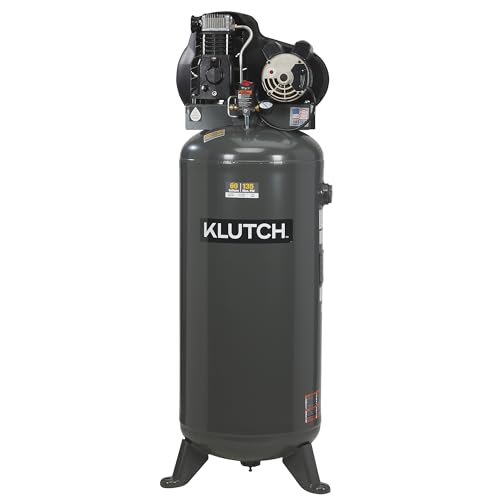
Six 60-gallon stationary compressors compared on published airflow, voltage, weight and footprint, with the airflow threshold that separates a nailer-only shop from one running a sander all afternoon.

By Taylor DavidsonUpdated 18 min read
On this page
- Best 60 gallon air compressor for woodworkers at a glance
- How I cut this field down to six
- Why CFM at 90 PSI decides it, not the 60-gallon tank
- 1. Klutch 60-Gallon Vertical Air Compressor — Best overall
- 2. POLAR AIR Industrial 3-Cylinder Silent Air Compressor — Best premium
- 3. DEWALT 60 Gallon Vertical Air Compressor — Best for pros
- 4. BILT HARD 60 Gallon Air Compressor — Best minimal setup
- 5. VEVOR 60 Gallons Heavy-Duty Air Compressor — Best large-capacity
- 6. JEGS Air Compressor [3 HP — Runner-up
- Does a 60 gallon air compressor suit a woodworking shop?
- What will your electrical panel actually allow?
- How much floor space does each one eat?
- What the listings do not tell you
- The verdict
- FAQ
The best 60 gallon air compressor for woodworkers is the Klutch 60-Gallon Vertical, because its published 9.3 CFM at 90 PSI comes from the lightest body in this group at 220 lb, on the cheapest price position of the six. If your shop has to run a sander or a drum-sanding setup for long stretches, the BILT HARD claims 15 SCFM at 90 PSI from a two-stage pump instead. Airflow at working pressure, not tank size, is what separates these machines.
All six hold 60 gallons. That number tells you almost nothing. The figure that splits this field is CFM at 90 PSI, and across these listings it runs from 6.3 up to 19. That is a threefold spread inside one tank size.
Best 60 gallon air compressor for woodworkers at a glance
| Pick | CFM @ 90 PSI | Voltage | Price |
|---|---|---|---|
Best overall Klutch 60-Gallon Vertical Air Compressor |
9.3 CFM claim | 230V | Check Price |
| 19 CFM claim | 230V | Check Price | |
Best for pros DEWALT 60 Gallon Vertical Air Compressor |
11 SCFM claim | 240V | Check Price |
Best minimal setup BILT HARD 60 Gallon Air Compressor |
15 SCFM claim | Single phase | Check Price |
Best large-capacity VEVOR 60 Gallons Heavy-Duty Air Compressor |
12 SCFM claim | 230V | Check Price |
Runner-up JEGS Air Compressor [3 HP |
6.3 CFM claim | 110V | Check Price |



How I cut this field down to six
My criteria were weighted, and airflow carried the most weight by a wide margin. Here is the order I applied.
- Published CFM at 90 PSI, weighted heaviest. Ninety PSI is where most air tools are rated, so it is the only airflow figure worth comparing. I needed it stated in the listing.
- Voltage stated. A 230V machine is a wiring job. A 110V machine is not. That single line changes the total cost of ownership more than any other spec.
- Physical footprint and weight. Height decides whether a vertical tank clears your ceiling, and weight decides whether you can position it without help.
- Published warranty and pump type. Two-stage versus single-stage, cast iron versus not, plus whether the seller commits to a term in writing.
Why those weights? Because a 60-gallon tank is a buffer, not a supply. The tank smooths demand spikes. The pump determines whether you can work continuously. Everything I cut failed on the first criterion: no stated airflow at 90 PSI, or a figure quoted only at 40 PSI, which flatters a weak pump.
That left six. Every one of them is listed by a single seller, which is normal for freight-shipped stationary units but worth knowing before you commit.
Why CFM at 90 PSI decides it, not the 60-gallon tank
Most guides to the best 60 gallon air compressor for woodworkers compare horsepower. Horsepower is the least useful number on the page. Two of these machines claim 5 HP and quote wildly different airflow: 12 SCFM for the VEVOR, 19 CFM for the POLAR AIR. Same stated horsepower, a 58% gap in output.
Here is the mechanism. Your tank holds 60 gallons of air. A finish nailer might pull under 1 CFM in bursts, so the tank alone covers it for a long time. A random orbital sander can pull 6 to 9 CFM continuously. Once your tool's draw exceeds what the pump makes, the tank empties and you are working at the pump's rate, not the tank's.
So the real question is which side of that line your work sits on.
- Nailers, staplers, blowguns, occasional spraying: almost any pump here keeps up.
- A sander, a die grinder, or a small spray setup running for an hour: you want a claimed figure comfortably above your tool's rating.
- Two tools at once: double the draw, then add headroom.
Duty cycle matters too. A two-stage pump compresses in two steps and runs cooler, which is why the BILT HARD and the POLAR AIR are built the way they are. A single-stage pump like the Klutch's is simpler and lighter and perfectly adequate for intermittent work.
1. Klutch 60-Gallon Vertical Air Compressor — Best overall
The Klutch pairs a stated 9.3 CFM at 90 PSI with the lightest body of the six at 220 lb, and it sits at the cheapest price position here.
Best for: a 230V shop running one air tool at a time Skip it if: you need to feed a continuous-duty sander all afternoon
Two things separate this pick inside the set. First, weight: 220 lb against 235.9 lb for the VEVOR, 239 lb for the DEWALT, 310 lb for the JEGS and 357 lb for the BILT HARD. That is 137 lb lighter than the heaviest here, which is the difference between positioning it with one helper and hiring two.
Second, it is the one buyers choose most often in this group by a very wide margin, and it holds the cheapest position of the six at the same time. That combination is rare.
Klutch lists a 3.7 HP dual-induction motor, 9.3 CFM at 90 PSI and 135 max PSI. The pump is described as a splash oil-lubricated cast iron twin cylinder with a ball bearing-supported crankshaft, belt driven. Maintenance points named in the listing include a manual tank drain, a petcock drain valve and an oil sight gauge.
The trade-off is ceiling. Its 135 max PSI is the lowest of the six, and 9.3 CFM sits below the DEWALT's 11, the VEVOR's 12 and the BILT HARD's 15. For a woodshop cycling between a nailer, a blowgun and short sanding runs, that headroom is rarely the constraint. For continuous heavy draw, it is.
Pros:
- Lightest of all six picks at 220 lb
- Cheapest price position in this group
- Stated 9.3 CFM at 90 PSI from a cast iron twin-cylinder pump
- Sells faster than any other pick here
- Oil sight gauge and petcock drain named in the listing
Cons:
- Lowest max pressure of the six at 135 PSI
- Single-stage pump, not two-stage
- No published warranty term
- Requires a 230V circuit
- No dimensions listed, so ceiling clearance is unverified
2. POLAR AIR Industrial 3-Cylinder Silent Air Compressor — Best premium
Nothing else here claims 19 CFM, and nothing else pairs it with a 1750 RPM low-speed motor and an ASME/CRN certified tank.

Best for: a shop where noise and pump longevity matter most Skip it if: you want a published weight and warranty before buying
This is the airflow leader by a clear margin. POLAR AIR lists 5 HP, 60 gallons, 19 CFM and 230V. That is 4 CFM above the BILT HARD's claim and more than double the JEGS figure. It is a three-cylinder design, the only one described that way in this set.
The specification that actually matters for a woodshop is the motor speed. POLAR AIR says the 1750 RPM motor runs cooler and quieter than high-speed alternatives, with less vibration and longer pump life. In a shop where you are listening for tearout and router chatter, a lower-revving compressor changes the working environment. The company also claims the splash-lubricated cast iron pump is rated for 50,000 hours, and that the unit is assembled and tested in the United States. The tank carries ASME/CRN certification and the electricals carry ETL, per the listing.
It occupies the most expensive position of the six. Two gaps in the data bother me: there is no published weight and no dimensions, so you cannot plan a delivery route or check clearance before it arrives. Nor is a warranty term stated. Against the DEWALT, which publishes both a 2 year limited warranty and a 78 x 24 x 24 in envelope, that is a real information deficit at the top of the price range.
Pros:
- Highest stated airflow of the six at 19 CFM
- Low-speed 1750 RPM motor claimed to run cooler and quieter
- Three-cylinder cast iron pump, claimed 50,000-hour rating
- ASME/CRN tank and ETL electrical certification per listing
Cons:
- Most expensive pick here
- No published weight or dimensions
- No stated warranty term
- Needs 230V wiring
3. DEWALT 60 Gallon Vertical Air Compressor — Best for pros
This is the only pick in the set with both a published warranty and complete dimensions, which makes it the easiest one to plan a shop around.

Best for: anyone who wants a stated warranty and full dimensions before ordering Skip it if: your ceiling is under seven feet
Documentation is the differentiator. DEWALT lists 78 x 24 x 24 in, 239 lb, a 2 Year Limited Manufacturer warranty and model DXCM601.COM. Only two picks in this set publish a warranty at all, and the other is 30 days. That gap in stated coverage is 23 months.
On performance, DEWALT claims 3.7 HP, 155 max PSI, an oil-lubricated pump and 240V operation, with 13.4 SCFM at 40 PSI and 11 SCFM at the pressure that matters. That 11 SCFM figure puts it comfortably above the Klutch and below the BILT HARD, in the middle of the pack, and it holds a mid-range price position to match.
Now the ceiling problem. At 78 in tall, the tank alone is six and a half feet, and you need clearance above that for the pressure switch and any vertical air fitting. A standard 8 ft basement ceiling with ductwork can get tight. Measure before you order.
The trade-off against the POLAR AIR is straightforward: you give up 8 CFM of claimed airflow and the low-speed motor, and you gain a written warranty term and a footprint you can verify with a tape measure. For a professional shop that has to plan an install, that is often the better bargain.
Pros:
- 2 Year Limited Manufacturer warranty, the longest stated here
- Full dimensions published at 78 x 24 x 24 in
- Claimed 11 SCFM at 90 PSI and 155 max PSI
- Mid-range price position for a documented spec sheet
- 24 in square footprint on a 239 lb frame
Cons:
- Tallest published height of the six at 78 in
- Single-stage pump at this price position
- Claimed airflow trails three cheaper or comparable picks
- Requires a 240V circuit
4. BILT HARD 60 Gallon Air Compressor — Best minimal setup
A claimed 15 SCFM at 90 PSI and 175 max PSI from a two-stage cast iron pump, on a single-phase motor, means less pump cycling and fewer interruptions mid-cut.

Best for: long air-hungry sessions on a single tool Skip it if: you have to move it into place alone
Two-stage compression is the story. BILT HARD describes a two-stage cast iron pump, which compresses air in two steps and, per the listing, runs cooler with higher compression efficiency. It claims 5 HP single phase, 15 SCFM at 90 PSI and 175 max PSI. That 175 figure is the highest pressure ceiling of the six, 40 PSI above the Klutch.
For a woodworker, the practical benefit is fewer restarts. A larger stated airflow means the pump keeps ahead of a sustained draw, so the tank stays topped up and the motor is not kicking in every 90 seconds while you are trying to hear a router bit. The tank is described as ASME-certified 60-gallon steel, with a user-accessible drain valve and an oil sight glass for maintenance.
The cost is mass. At 357 lb, this is the heaviest pick here by 47 lb over the JEGS and 137 lb over the Klutch. It also sits in the most expensive tier and is the slowest seller of the six by a wide margin. No dimensions are published, which combined with the weight makes delivery planning harder than it should be. Get help, and clear the route first.
Pros:
- Two-stage cast iron pump, one of two here
- Highest stated max pressure at 175 PSI
- Claimed 15 SCFM at 90 PSI, second-highest in the set
- ASME-certified tank with accessible drain and oil sight glass
Cons:
- Heaviest pick at 357 lb
- Premium price position with no published warranty
- No dimensions listed
- Slowest-selling pick of the six
5. VEVOR 60 Gallons Heavy-Duty Air Compressor — Best large-capacity
Dual air outlets plus the shortest published height here at 59.1 in make this the pick for a low-ceilinged shop running two tools.
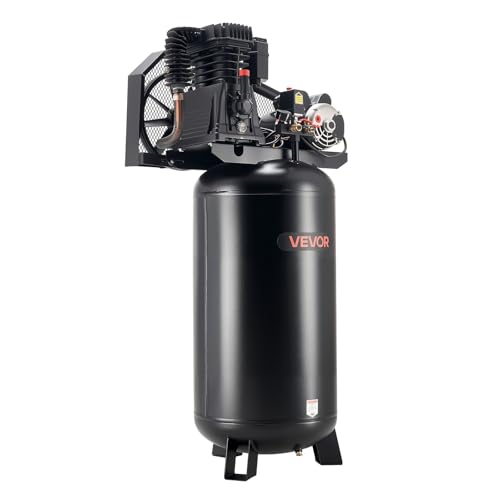
Best for: shops needing two outlets and a lower overall height Skip it if: you want a two-stage pump
Height is the reason this one earns a place. VEVOR publishes 59.1 x 28.3 x 20.9 in, which is 18.9 in shorter than the DEWALT. In a basement shop with 7 ft joists and a duct run, that difference decides whether the machine fits at all. It weighs 235.9 lb, near the middle of the group.
The dual outlet is the second differentiator. VEVOR says two air tools can run simultaneously, which no other listing here claims. Pair that with the stated 12 SCFM at 90 PSI and you have enough headroom to feed a nailer and a blowgun without swapping hoses. Max pressure is listed at 145 PSI, and the pump is a belt-driven, oil-lubricated design. The tank is described as 3 mm carbon steel with a powder-coated surface.
Two caveats. This is single-stage, so it does not match the BILT HARD's two-stage duty cycle despite both claiming 5 HP. And it is the only pick in this set filed under portable compressors rather than stationary, which is odd for a 235.9 lb machine and worth confirming against the listing photos.
Pros:
- Shortest published height in the set at 59.1 in
- Dual air outlets for two tools at once
- Claimed 12 SCFM at 90 PSI, mid-range price position
- 3 mm carbon steel powder-coated tank per listing
Cons:
- Single-stage pump only
- No published warranty term
- 145 max PSI trails the BILT HARD by 30 PSI
- Listed under portable compressors despite 235.9 lb weight
6. JEGS Air Compressor [3 HP — Runner-up
The only 110V machine of the six, which means no new circuit, and the only one that publishes a warranty term besides the DEWALT.

Best for: a shop with no 230V circuit available Skip it if: you plan to run anything beyond a nailer or blowgun
Voltage is the entire argument. Five of these six need 230V or 240V. The JEGS lists a 3 HP 110 Volt single-phase motor, so it can potentially run on wiring you already have, and it sits at the second-cheapest position here. If installing a dedicated 230V circuit is off the table, this shortens the list to one.
JEGS publishes a V-twin single-stage pump, 8.6 CFM at 40 PSI and 6.3 CFM at 90 PSI. The unit measures 70 x 22 x 27 in and weighs 310 lb, the second-heaviest here, with a stated 30 Days warranty.
Be clear-eyed about the airflow. That 6.3 CFM at 90 PSI is the lowest figure in this comparison, roughly a third of the POLAR AIR's claim. For a brad nailer, a framing nailer, a blowgun and tyre inflation, that is fine, and the 60-gallon tank covers the spikes. For a sander, it is not. You will be waiting on the pump.
The other honest weakness: 30 days of stated coverage against DEWALT's 2 years is the thinnest commitment in the group, on the second-heaviest machine here. Check the 110V circuit's amperage rating carefully before you buy.
Pros:
- Only 110V pick, avoiding a 230V install
- Second-cheapest position of the six
- Published dimensions at 70 x 22 x 27 in
- V-twin single-stage pump with stated airflow at two pressures
Cons:
- Lowest airflow here at 6.3 CFM at 90 PSI
- 30 Days warranty, the shortest stated term
- Second-heaviest at 310 lb
- No max PSI figure published
Does a 60 gallon air compressor suit a woodworking shop?
Amazon's search did not filter these listings for woodworking, and none of the six is described by its maker as a woodworking machine. That is a judgment you have to make yourself, so here is the framework.
Most woodworking air demand is intermittent. Brad nailers, pin nailers, staplers and blowguns fire in bursts of a fraction of a second. A 60-gallon tank absorbs hundreds of those before the pump needs to run. On that basis, any pick here is overqualified.
Where woodworking gets air-hungry is finishing and sanding. An HVLP conversion gun or a pneumatic random orbital sander draws continuously, and continuous draw is what exposes a weak pump. That is where the best 60 gallon air compressor for woodworkers becomes a genuinely different machine from the best one for a nailer.
Three shop-specific issues these listings do not address:
- Moisture. Compressed air carries water. Water in a spray gun ruins a finish. None of these listings mentions a dryer or a filter, so budget for aftermarket water separation.
- Dust. A woodshop is a dusty environment and compressors breathe. Intake filter access matters, and only some of these listings detail it.
- Noise. You are often listening to your cut. The POLAR AIR's 1750 RPM low-speed motor claim is the only noise-related specification anyone here publishes.
What will your electrical panel actually allow?
This is the question that eliminates picks fastest, and it costs nothing to answer. Go look at your panel before you shortlist anything.
The split in this set is stark. Five machines need 230V or 240V single-phase: the Klutch, the POLAR AIR, the DEWALT, the BILT HARD and the VEVOR. One, the JEGS, lists a 110 Volt motor.
If you already have a 230V circuit in the shop, ignore this section and buy on airflow. If you do not, you have two paths:
- Have an electrician run a 230V circuit. This opens the full field, including the 19 CFM POLAR AIR and the two-stage BILT HARD. It is a one-time job and it is the right answer if you plan to add other 230V machinery later.
- Buy the 110V JEGS. No electrician, but you accept 6.3 CFM at 90 PSI, which is the airflow floor of this group.
One detail worth flagging: the VEVOR listing specifies 230V 60Hz and "No-Plug", meaning it arrives without a plug fitted. Wiring is on you or your electrician either way. Plan for it rather than discovering it on the delivery pallet.
How much floor space does each one eat?
Three of six publish dimensions, and the range is wider than you would guess for one tank size.
- DEWALT: 78 x 24 x 24 in, 239 lb. Tallest here, smallest square footprint.
- JEGS: 70 x 22 x 27 in, 310 lb.
- VEVOR: 59.1 x 28.3 x 20.9 in, 235.9 lb. Shortest by 18.9 in.
The Klutch, the POLAR AIR and the BILT HARD publish no dimensions, so treat those as unknown until you check the listing directly.
Two clearance rules that catch people out. First, measure to the lowest obstruction over the intended spot, not the highest point of the ceiling. Joists, lights and ducts are what you actually hit. Second, add several inches above the tank for the pressure switch, the regulator and a hose that has to bend somewhere.
Weight determines the install, not the footprint. The Klutch at 220 lb and the BILT HARD at 357 lb are the same tank capacity and a 137 lb apart. That gap decides whether you are tilting a machine off a pallet with a friend or renting an appliance dolly.
What the listings do not tell you
Four gaps show up repeatedly in this group, and none of them is a reason to walk away. They are things to plan around.
- Warranty is mostly unstated. Only the DEWALT at 2 Year Limited Manufacturer and the JEGS at 30 Days publish a term. Four of six say nothing. Absence of a stated term is not absence of coverage, but it is absence of information.
- Noise is almost never quantified. No pick here publishes a decibel figure. POLAR AIR's 1750 RPM claim is the closest thing to a noise specification anyone offers.
- Included accessories are unlisted. No listing here itemises a regulator, gauges, a hose or fittings. Assume you supply the hose and any water separator.
- Single-seller listings across the board. All six show one seller. That is typical for freight items, but it means no competing offer to compare against.
One more practical note. Every one of these pumps is oil-lubricated, and three listings specifically name an oil sight gauge or glass. That means periodic oil checks and changes, not a sealed unit you can ignore. Factor a few minutes a month into ownership.
The verdict
The Klutch 60-Gallon Vertical is the best 60 gallon air compressor for woodworkers as a default, and the reasoning is narrow. It publishes 9.3 CFM at 90 PSI, which clears the draw of every nailer, stapler and blowgun a woodshop uses, on the lightest frame here at 220 lb, at the cheapest price position of the six, and it is the pick buyers here choose most often by a wide margin. Nothing else in this set combines those four things.
Two conditions flip it. First, if you run a pneumatic sander or a spray gun continuously, buy the BILT HARD instead: 15 SCFM at 90 PSI from a two-stage cast iron pump and 175 max PSI, and accept the 357 lb delivery in exchange. Second, if you have no 230V circuit and no plan to add one, the JEGS at 110 volts is the only pick you can plug in, and you take 6.3 CFM at 90 PSI as the price of that convenience.
The runner-up's specific advantage over the winner is the POLAR AIR's 1750 RPM low-speed motor, claimed to run cooler and quieter, plus 19 CFM. In a shop where you need to hear your cut, that is worth the premium position it occupies.
FAQ
Is a 60 gallon air compressor worth it for a home woodshop?
A 60 gallon air compressor is worth it if you use air tools weekly rather than occasionally. The tank buffers hundreds of nailer shots between pump cycles, and that means quieter working and less motor wear. If you fire a brad nailer twice a year, a small portable unit does the same job in less floor space and needs no dedicated circuit.
What CFM do woodworkers actually need at 90 PSI?
The CFM you actually need depends on your most demanding tool. Nailers and staplers draw well under 1 CFM in bursts, so the 6.3 CFM JEGS handles them. A pneumatic random orbital sander can pull 6 to 9 CFM continuously, which is where the BILT HARD's claimed 15 SCFM or the POLAR AIR's 19 CFM earns its keep. Match the pump to the hungriest tool.
Klutch or DEWALT: which is the better buy?
Between the Klutch and DEWALT, the split is airflow and paperwork. The Klutch claims 9.3 CFM at 90 PSI, weighs 220 lb and holds the cheapest position here. The DEWALT claims 11 SCFM, publishes 78 x 24 x 24 in dimensions and a 2 Year Limited Manufacturer warranty. Pick the DEWALT if documented coverage and verified clearance matter more than 19 lb and price position.
Will a 60-gallon vertical compressor fit under an 8-foot ceiling?
A 60-gallon vertical compressor usually fits under 8 feet, but check the lowest obstruction rather than the ceiling itself. The DEWALT stands 78 in tall, leaving 18 in for switches, fittings and a hose bend. The VEVOR at 59.1 in gives far more room. Joists, ducts and lights are what you actually collide with, so measure to those.
Do I need a 230V circuit for these compressors?
You need a 230V circuit for five of these six. The Klutch, POLAR AIR, DEWALT, BILT HARD and VEVOR all specify 230V or 240V single-phase operation, and the VEVOR ships with no plug fitted. Only the JEGS lists a 3 HP 110 Volt motor. If wiring work is not an option, that narrows the field to a single pick.
Start at your electrical panel, then measure your lowest ceiling obstruction. Those two numbers eliminate most of this list before airflow enters the conversation. Once you know what you can power and where it fits, the Klutch is the sensible default because it asks the least of your shop: 220 lb to move, the cheapest position of the six, and a stated 9.3 CFM at 90 PSI that covers every nailer and blowgun in a woodworking setup. Buy more airflow when a sander or a spray gun makes you, not before.