Best Compact Wood Planer for DIY: WEN 6530 Wins
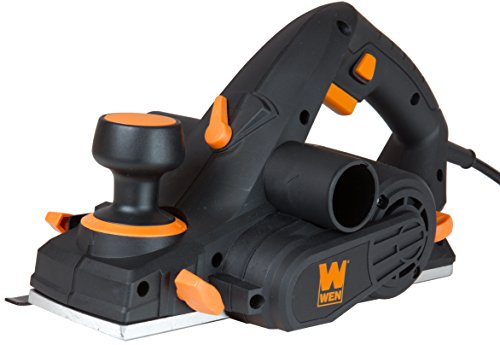
Five compact planers compared on cut width, depth control, and what each one actually asks of a home shop. The WEN 6530 leads, but not for everyone.

By Taylor DavidsonUpdated 14 min read
On this page
- Best compact wood planer for DIY enthusiasts at a glance
- What actually decides a compact planer purchase?
- How I narrowed the field to five
- 1. WEN 6530 6-Amp Electric Hand Planer — Best overall
- 2. VEVOR Electric Hand Planer — Best for heavy use
- 3. Masitke 3-1/4 Inch Electric Hand Planer — Best premium
- 4. Amazon Basics Woodworking Hand Planer — Best compact
- 5. NADOBA Wood Planer Hand Tool — Best budget pick
- Electric or hand-powered: which suits your shop?
- How much wood can each one actually remove?
- What the listings do not tell you
- The verdict
- FAQ
The best compact wood planer for DIY enthusiasts is the WEN 6530, a 6.5 lb corded hand planer with a 6-amp motor, 16 positive depth stops, and a published 2-year warranty. If you want more motor and a wider grab-bag of accessories for rougher stock, the VEVOR 2822C is the better buy at 6.61 lb with a 710W motor and a 5/64 in maximum cut. The rest of this guide splits the field by how you actually work.
Best compact wood planer for DIY enthusiasts at a glance
| Pick | Cut depth | Weight | Price |
|---|---|---|---|
Best overall WEN 6530 6-Amp Electric Hand Planer |
0 to 1/8 in, 16 stops | 6.5 lb | Check Price |
Best for heavy use VEVOR Electric Hand Planer |
0 to 5/64 in (2mm) | 6.61 lb | Check Price |
Best premium Masitke 3-1/4 Inch Electric Hand Planer |
0 to 2mm claim | Not listed | Check Price |
Best compact Amazon Basics Woodworking Hand Planer |
Adjustable, manual | 2.66 lb | Check Price |
Best budget pick NADOBA Wood Planer Hand Tool |
Adjustable blade, manual | 11.3 g body | Check Price |


What actually decides a compact planer purchase?
Most guides to the best compact wood planer for DIY enthusiasts lean on cut width. Every powered pick in this set is 3-1/4 in, so width does not separate them. The real deciding specification is how deep the tool cuts in a single pass, and how finely you can dial that depth in.
The WEN 6530 lists 16 positive stops from 0 to 1/8 in. That is roughly double the depth range of the VEVOR at 5/64 in (2mm) and the Masitke at a claimed 2mm. For a DIYer sizing a sticking door or shaving a rough edge flush, more depth per pass means fewer passes.
Weight matters second. The WEN sits at 6.5 lb, the VEVOR at 6.61 lb. That is close. Over an afternoon of edge work above your head, the tenth of a pound is nothing next to how the grip fits your hand.
Warranty is the third split. The WEN publishes a 2-year warranty. None of the other four lists one.
How I narrowed the field to five
I set the criteria before I opened the listings, then weighted them for a DIY buyer rather than a trim carpenter.
- Cut depth per pass, weighted heaviest. A tool that can only shave 2mm is fine for finishing and useless for fitting a swollen door.
- Weight and grip surface, weighted second. Compact tools live or die by how they feel in one hand for ten minutes at a time.
- Published warranty, weighted third. A stated warranty is the closest thing to a manufacturer standing behind the motor.
- Included accessories, weighted fourth. A dust bag, an edge guide and a rabbeting fence turn a bare planer into something usable on day one.
Three things got cut. Anything wider than 3-1/4 in, on the grounds that a wider sole is no longer compact. Anything without a published cut depth. Anything where the listing gave no dimensions at all, unless it was a purely manual tool where dimensions are self-evident.
Five picks came through. Three are powered 3-1/4 in electric planers. Two are hand-powered, at opposite ends of the size scale: a full No.4 bench plane and a block-sized shaver.
The keyword asks for compact planers for DIY enthusiasts, and Amazon's search treats the "for DIY enthusiasts" part loosely. Only the Masitke listing mentions DIY directly. Judge fit by the specifications, not the marketing.
1. WEN 6530 6-Amp Electric Hand Planer — Best overall
The WEN 6530 wins because it pairs the deepest single-pass cut in this set with the only published warranty.
Best for: DIYers doing door edges, rabbets and general stock prep Skip it if: you only need to knock down a splinter now and then
The specification that carries this pick is the 0 to 1/8 in depth range across 16 positive stops. That is a wider working range than either the VEVOR or Masitke lists, and stopped adjustment matters when you want to return to the same setting on a second board. The 6-amp motor drives 34,000 cuts per minute per WEN, and the tool weighs 6.5 lb in a 7 x 12 x 7 in body. WEN lists the 2-year warranty on the listing, which none of the other picks match.
In the box, WEN says you get the planer, a dust bag, a kickstand, a parallel fence bracket and a 5/16 in rabbeting guide that supports rabbets up to 1 in. That accessory list is what makes it a genuine DIY tool out of the packaging rather than a bare motor.
Against the VEVOR it gives up a fraction of a pound. Against the Masitke it costs less and publishes far more of its specifications. The trade-off is that it sits in the premium price position of this set: you pay for the depth range and the warranty.
Pros:
- Deepest published cut depth in the set, 0 to 1/8 in
- 16 positive depth stops for repeatable settings
- Published 2-year warranty, the only one here
- Rabbeting guide supports rabbets up to 1 in
- Dust bag, kickstand and fence included
Cons:
- Premium price position in this set
- Corded only, no cordless option
- 6.5 lb is heavier than the Amazon Basics hand plane
2. VEVOR Electric Hand Planer — Best for heavy use
The VEVOR earns the heavy-use slot with a 710W motor and 16,500 RPM in a body only a tenth of a pound heavier than the WEN.

Best for: weekend builders working through rougher, thicker stock Skip it if: you want the lightest tool in the set
VEVOR lists a 710W, 6-amp all-copper motor at 16,500 RPM and calls the blades HSS W18Cr4V steel at ≥58HRC hardness. The cut width is 3-1/4 in, matching the WEN and Masitke, but the maximum depth is 5/64 in (2mm), narrower than the WEN's 1/8 in. The body measures 6.7 x 13 x 6.7 in and weighs 6.61 lb.
Where this planer earns its place is the combination of stated motor wattage and blade hardness. Neither the WEN nor the Masitke publishes a blade hardness figure. VEVOR also lists a dust collection bag sized for longer sessions between empties, which the listing frames as reducing cleanup frequency.
The trade-off is depth range. If your work is shaving off swollen door edges in one pass, the WEN's 1/8 in wins. If your work is repeatedly hogging material off construction lumber in shallow passes, the VEVOR's motor and blade specification give it the endurance edge. It sits mid-band on price in this set.
Pros:
- 710W motor at 16,500 RPM per the listing
- HSS W18Cr4V blades rated ≥58HRC per VEVOR
- Large dust bag for longer sessions
- Mid-price position, not premium
- 3-1/4 in cut width matches the class leaders
Cons:
- Maximum depth 5/64 in, less than the WEN
- No published warranty
- Corded only
3. Masitke 3-1/4 Inch Electric Hand Planer — Best premium
The Masitke's edge is the kit: it ships as a bundled set with an edge guide and V-groove built into the shoe.

Best for: shoppers who want a kitted electric planer with edge and V-groove guides Skip it if: you need published weight or dimensions before you buy
Masitke lists a 16,000 RPM motor and a 0 to 2mm cutting depth on a 3-1/4 in cut width. The listing highlights an integrated V-groove on the shoe for chamfering, plus an edge guide that Masitke frames as supporting straight uniform edge cuts. The kit is described as complete, with edge guide, carbon brushes, glove and dust chute.
What this pick costs you is transparency. The listing does not publish a weight or overall dimensions, which puts you at a disadvantage judging whether it feels right for your hand next to the WEN and the VEVOR. On depth, its 2mm ceiling matches the VEVOR and falls short of the WEN's 1/8 in.
It sits at the top of the price band in this set. That is the trade you make: you pay the premium for the bundled edge and V-groove guides, and you accept that key comparability figures are missing from the listing.
Pros:
- Integrated V-groove for chamfering per Masitke
- 16,000 RPM motor claim
- Kit includes edge guide, brushes and dust chute
- Safety lock button on the trigger per the listing
- Rubber anti-slip handle per the listing
Cons:
- Highest price position in this set
- No published weight or dimensions
- No published warranty
- Depth capped at 2mm
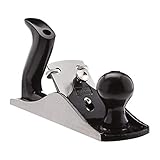
4. Amazon Basics Woodworking Hand Planer — Best compact
At 2.66 lb, this No.4 bench plane is by far the lightest full-sized planer in the set, and the only powered-shop alternative here.

Best for: small-shop DIYers smoothing edges and trimming doors by hand Skip it if: you need to hog off material fast
The Amazon Basics plane is a No.4 pattern with a 2 in (51 mm) steel blade in a cast-iron body measuring 2.5 x 9.8 x 4.8 in. It weighs 2.66 lb. That is less than half the weight of the WEN or VEVOR and puts it in reach of anyone who does not want a corded motor buzzing under their palm. The listing describes an adjustable mouth and depth gauge, front and rear handles, and blade adjustment via screws and a lever cap.
What you give up is speed. A hand plane removes what you drive through it, one pass at a time. For flattening a rough board edge that is a virtue: you feel the cut. For sizing three doors on a Saturday it is a slower afternoon than the WEN would give you.
The blade is 2 in wide, narrower than the 3-1/4 in electric picks, so this is a smoothing and trimming tool rather than a wide-stock flattener. Against the NADOBA it offers a proper bench-plane body and adjustable mouth, which the tiny block-sized shaver cannot match. It sits in the entry price band.
Pros:
- 2.66 lb, lightest full-size planer here
- 2 in steel blade with adjustable mouth
- Cast-iron body with front and rear handles
- Entry price band, second-cheapest in the set
- No cord, no maintenance beyond the blade
Cons:
- Manual only, no motor
- 2 in blade is narrower than the electric picks
- No published warranty
- Requires sharpening and sole flattening over time
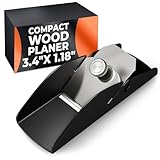
5. NADOBA Wood Planer Hand Tool — Best budget pick
The NADOBA is a 3.4 x 1.18 in block-style shaver: the smallest, lightest and cheapest tool in the set, aimed at craft work.
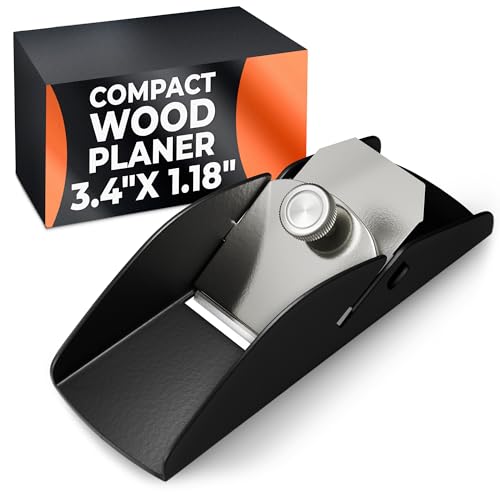
Best for: craft, garden-box and detail work with a tiny block plane Skip it if: you plan to flatten boards or true up furniture stock
NADOBA lists a stainless and carbon steel body measuring 3.15 x 12.6 x 3.94 in per the packaging figure, with the block itself at 3.4 x 1.18 in per the listing. The blade is adjustable. It is the cheapest of the five in this set and the smallest by working footprint.
Read the listing carefully and its intended use is clear: detail work on summer projects, garden boxes and craft builds. NADOBA frames it as suitable for straightening surfaces and creating parallel surfaces on outdoor furniture and trellises. That is a narrower job than the Amazon Basics No.4, and much narrower than the electric picks.
The trade-off is capability. This is not a shortcut version of the WEN or VEVOR. It is a different tool for a smaller job, and if you buy it expecting to flatten a rough oak board you will be disappointed. Bought for what it is, it fills a gap the powered planers cannot: quiet, cordless, small enough to keep in a drawer.
Pros:
- Cheapest of the five picks
- Stainless and carbon steel body per the listing
- Small enough for craft and garden work
- No cord, no motor, no maintenance
- Adjustable blade
Cons:
- Not suitable for flattening or full stock prep
- No published warranty
- Very small working blade
- Listed weight of 11.3 g looks like a packaging figure, not the tool weight
Electric or hand-powered: which suits your shop?
The powered and manual picks in this set answer different questions. Before you compare specifications inside a category, decide which category you are in.
Reach for an electric planer when:
- You are sizing doors, sizing framing lumber, or removing paint layers.
- You want to shave 1/16 in or more per pass.
- You have a bench and a dust bag, and neighbours who tolerate noise.
Reach for a hand plane when:
- You want fine control over each stroke.
- You work on furniture edges, small parts, or reclaimed wood with hidden nails.
- You do not want to buy an extension cord or manage carbon-brush wear.
The WEN, VEVOR and Masitke all sit on the electric side. The Amazon Basics No.4 and the NADOBA sit on the hand side, at very different scales. There is no crossover pick here that does both jobs. That is by design: a tool that tried to would be worse at each.
How much wood can each one actually remove?
The powered picks publish their maximum cut depth per pass in different units, and it is worth translating them into a like-for-like comparison.
- WEN 6530: 1/8 in maximum depth (about 3.2mm), across 16 stops.
- VEVOR 2822C: 5/64 in maximum (2mm), knob-adjustable.
- Masitke: 2mm claim, knob-adjustable per the listing.
So per pass, the WEN removes roughly 60% more material at its deepest setting than either competitor. On a swollen exterior door that needs 4mm off the strike side, that difference is one pass rather than two. Over a weekend of fitting work it is real time.
For finish work, the maximums matter less than the minimums. All three go down to zero, which means you can dial in a whisper cut before your final pass. The Masitke and VEVOR give you a continuous knob. The WEN gives you 16 detents, which is easier to return to a setting you liked yesterday.
What the listings do not tell you
Amazon listings are marketing copy, not test reports. A few things are worth checking on the product page directly, because they change often and I cannot pull them from the input:
- Cord length. All three electric picks are corded. None of the listings puts the cord length in the specification block.
- Blade replacement cost. HSS blades wear. Look for how many replacement blades ship with the tool and what a spare set costs.
- Dust-bag or vac-port fit. Every powered pick claims dust collection. Whether the port takes a standard shop-vac hose is not always stated.
- Left-hand friendly? Every powered planer here throws chips to one side. If you plane left-handed, that matters.
- Where the depth knob sits. A knob on the front handle is easy to adjust mid-cut. A knob elsewhere is not.
None of that changes the ranking. It changes how happy you are with the tool a week after it arrives.
The verdict
The best compact wood planer for DIY enthusiasts is the WEN 6530. It publishes the deepest single-pass cut in the set at 0 to 1/8 in across 16 positive stops, it weighs 6.5 lb, and it is the only pick here backed by a stated 2-year warranty. The accessory kit, with dust bag, kickstand, parallel fence and rabbeting guide, means you unbox it ready to work rather than ready to shop.
Two conditions flip that recommendation. First, if you are working through rougher, thicker stock in shallow passes and want a stated 710W motor with hardened HSS blades, the VEVOR 2822C is the better buy, and it sits a price band cheaper. Second, if power is the wrong answer entirely, either because your work is furniture-scale finishing or because you want a quiet, cordless tool, the Amazon Basics No.4 at 2.66 lb is the compact hand plane to reach for.
The Masitke earns its place on the strength of its bundled edge guide and V-groove, but its missing weight and dimension figures make it a harder tool to judge before it arrives. The NADOBA is a craft tool, honestly described as one, and worth having in a drawer if garden-box work is on your list.
FAQ
Is the WEN 6530 worth it for a DIYer?
The WEN 6530 is worth it if your DIY work involves door fitting, edge trimming, or general stock prep at 3-1/4 in width. The 1/8 in maximum depth and 16 positive stops give you room to hog off material and dial in a finish pass. The 2-year warranty and included fence, dust bag and rabbeting guide add value that the bare tools in this set do not match.
How much cutting depth do compact wood planers offer?
Cutting depth on compact wood planers in this set runs from 2mm at the low end to 1/8 in (about 3.2mm) at the high end. The VEVOR and Masitke both cap at 2mm per pass. The WEN 6530 reaches 1/8 in across 16 detented stops. Hand planes like the Amazon Basics No.4 use blade projection instead, adjustable by lever and screw rather than by a knob.
WEN 6530 or VEVOR 2822C for a home shop?
WEN 6530 or VEVOR 2822C comes down to depth versus motor. The WEN gives you 1/8 in per pass and a 2-year warranty at 6.5 lb. The VEVOR gives you a stated 710W, 16,500 RPM motor with HSS W18Cr4V blades at 6.61 lb, one price band down. Pick the WEN for fewer passes, pick the VEVOR for endurance and value.
Do I need an electric planer or will a hand plane do?
Whether you need an electric planer depends on how much wood you remove and how often. Sizing doors, dressing framing lumber, or planing a whole tabletop points electric. Smoothing a shelf edge, chamfering a corner, or shaving a tight drawer bottom points hand. Electric moves faster and louder. Hand planes let you feel the cut, cost less, and never need a cord or brushes.
What accessories should come with a compact planer?
Accessories that should come with a compact planer include a dust bag or chute, a parallel fence for straight edges, and a kickstand so the tool rests off the workpiece. The WEN 6530 lists all three, plus a rabbeting guide. The Masitke ships an edge guide, brushes and a dust chute. The VEVOR includes a large dust bag. The hand planes need none of that, only sharpening.
If you are choosing one tool today and you want to stop second-guessing, order the WEN 6530 and treat the depth stops as your safety net. The reason it earns the top spot is not raw power. It is that a compact planer for a home shop lives or dies by how repeatable your settings are, and 16 detents plus a stated 2-year warranty is the closest thing to a promise you will get from a listing. Save the VEVOR for the day you outgrow shallow passes, and keep an Amazon Basics No.4 on the bench for the jobs no cord belongs near.