Best Finish Nail Gun for Professionals: Gauge Guide

Five nailers, three gauges, one clear default. A look at what 16-gauge, 15-gauge, 18-gauge and 23-gauge fasteners actually do to trim, and which of these tools belongs in a working kit.

By Taylor DavidsonUpdated 15 min read
On this page
- Best finish nail gun for professionals at a glance
- How I screened these five nailers
- Which gauge should a finish nail gun fire?
- 1. Metabo HPT 16 Gauge Finish Nailer — Best overall
- 2. Metabo HPT 15 Gauge Angled Finish Nailer — Best upgrade
- 3. Milwaukee M18 Fuel 18 Gauge Brad Nailer — Best premium
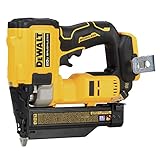
- 4. DEWALT PIN NAILER CMPCT 20V 23G — Best minimal setup
- 5. SILVEL 2" Cordless Brad Nailer — Best budget pick
- Pneumatic or cordless: which suits your work?
- What the listings do not tell you
- When a different pick wins
- The verdict
- FAQ
The best finish nail gun for professionals is the Metabo HPT NT65M2S, a 3.7 lb 16-gauge pneumatic that fires nails from 1 in to 2-1/2 in and carries a 5-year warranty. If you hang heavy casing and crown all week, the 15-gauge NT65MA4 and its angled magazine is the better buy. Gauge is what splits this field, not brand. A 23-gauge pin and a 15-gauge DA nail do completely different jobs on the same piece of trim.
Best finish nail gun for professionals at a glance
| Pick | Gauge & fastener range | Weight | Price |
|---|---|---|---|
Best overall Metabo HPT 16 Gauge Finish Nailer |
16 ga straight 1–2.5 in |
3.7 lb | Check Price |
Best upgrade Metabo HPT 15 Gauge Angled Finish Nailer |
15 ga angled DA 1.25–2.5 in |
4.2 lb | Check Price |
Best premium Milwaukee M18 Fuel 18 Gauge Brad Nailer |
18 ga brad range not listed |
6.53 lb | Check Price |
Best minimal setup DEWALT PIN NAILER CMPCT 20V 23G |
23 ga pin 5/8–1.5 in |
4.45 lb | Check Price |
Best budget pick SILVEL 2" Cordless Brad Nailer |
18 ga brad + staple 3/4–2 in |
not listed | Check Price |



How I screened these five nailers
I started with the published specification sheets and compared them column by column: fastener gauge, fastener length range, weight, dimensions, warranty and power source. Nothing else. No claim about hold strength or hole size made the cut unless the listing stated the figure behind it.
Three things carried the most weight in the ranking:
- Fastener gauge and length range. This is the single specification that decides which trim a tool can hang, and four of these five publish it precisely.
- Weight. Trim work is overhead work. The spread here runs from 3.7 lb to 6.53 lb, and 2.83 lb of difference is real by the end of a ceiling run.
- Published warranty. Two of the five state a 5-year term. One states only "Manufacturer Warranty" with no length. Two publish nothing.
What got cut from the shortlist: anything with no stated fastener range, since a nailer whose magazine capability is a mystery is not a tool you can spec a job around. That is also why one pick here sits at the bottom despite being the cheapest of the five.
One note on the search itself. The word "professionals" is not a specification any manufacturer publishes, so no tool here can be certified as a trade-grade unit by its listing alone. What you can check is warranty length, weight and whether the fastener range covers the trim you actually hang. Those three, read together, are the closest honest proxy.
Which gauge should a finish nail gun fire?
Gauge is the diameter of the fastener. Lower number means thicker nail. Thicker nail means more holding power and a bigger hole to fill.
The field splits cleanly:
- 15-gauge is the thickest here. The NT65MA4 takes angled DA nails from 1-1/4 in to 2-1/2 in. Metabo HPT lists it for crown, base, casing, chair rail, cabinets and exterior trim. Holes need filling.
- 16-gauge is the working default. The NT65M2S covers 1 in to 2-1/2 in in a straight magazine. Slightly smaller hole than 15-gauge, nearly the same hold on most trim.
- 18-gauge brad is for thin stock and light mouldings. The Milwaukee and the SILVEL both fire 18-gauge.
- 23-gauge pin leaves a hole you often do not fill at all. DEWALT's DCN623B drives pins from 5/8 in to 1-1/2 in. Pins hold almost nothing on their own; they hold glue in place while it cures.
Here is the part most guides skip. If you own one finish nail gun for professionals work, it should be 16-gauge, because it is the only gauge that covers base and casing without either splitting stock or failing to hold. Pins and brads are second tools, not first ones. That is why the ranking looks the way it does: the two Metabo HPT units sit at the top on fastener capability, and the specialists follow.
1. Metabo HPT 16 Gauge Finish Nailer — Best overall
The lightest tool in this set at 3.7 lb, firing the most useful gauge, with the longest stated warranty.
Best for: trim carpenters who run a compressor daily Skip it if: you need a cordless tool for punch-list calls
Weight is where this one separates itself. At 3.7 lb it is 0.5 lb under the 15-gauge Metabo HPT, 0.75 lb under the DEWALT pin nailer, and 2.83 lb under the Milwaukee. That gap matters on crown, where the tool spends the day above your shoulders. Metabo HPT credits the low mass and balance with reducing fatigue, and the figure at least supports the claim.
The fastener range is 1 in to 2-1/2 in in 16-gauge, which covers baseboard, door and window casing, and most stool and apron work with one magazine. The selective actuation switch flips between sequential and bump fire, so you can run production speed on long base and drop back to single shots on mitres. Depth of drive adjusts tool-free.
The 5-year warranty is one of only two stated terms in this set. The body measures 10.4 x 11.6 x 2.1 in, and that 2.1 in width is the narrowest here by a wide margin.
The trade-off is the hose. This is a pneumatic, so a compressor, a line and a fitting come with it, and none of that is in the box.
Pros:
- Lightest in this set at 3.7 lb
- Covers 1 in to 2-1/2 in 16-gauge nails
- Stated 5-year warranty
- Bump and sequential fire on one switch
- 2.1 in body width, narrowest here
Cons:
- Needs a compressor and hose you buy separately
- Only one seller lists it
- 16-gauge holes still need filling on stain-grade work
- No case or fasteners listed as included
2. Metabo HPT 15 Gauge Angled Finish Nailer — Best upgrade
The thickest fastener in this group, in an angled magazine that reaches into corners a straight magazine cannot.

Best for: heavy casing, crown and exterior trim Skip it if: you work mostly on delicate shoe mould
Two things justify the step up. First, 15-gauge DA nails are thicker than 16-gauge, so they hold heavier stock with less flex. Metabo HPT lists this tool for crown and base moulding, window and door casing, chair rails, cabinets and exterior trim. Second, the magazine is angled, which lets the nose sit closer to an inside corner or up against a jamb.
Range is 1-1/4 in to 2-1/2 in. Note the bottom end: it starts a quarter inch longer than the 16-gauge NT65M2S, so short fasteners are not an option here. Weight is 4.2 lb and the body runs 12 x 13 x 3.4 in, making this the physically largest of the two pneumatics. The 360-degree adjustable exhaust port sends air away from your face and away from finished stock, which is a genuine benefit on stain-grade work.
Selective actuation is the same as on the 16-gauge, and the warranty is again stated at 5 years.
The cost of thicker nails is bigger holes to fill, and 15-gauge is more likely to split narrow mouldings. This is a tool for heavy trim, not for delicate profiles. It also sells slower than every other pick here.
Pros:
- Thickest fastener in this set at 15 gauge
- Angled magazine reaches inside corners
- 360-degree adjustable exhaust port
- Stated 5-year warranty
- Selective bump or sequential actuation
Cons:
- Largest footprint of the two pneumatics at 12 x 13 x 3.4 in
- No fasteners shorter than 1-1/4 in
- Bigger holes to fill than 16-gauge
- Slowest seller of the five
- Compressor and hose not included
3. Milwaukee M18 Fuel 18 Gauge Brad Nailer — Best premium
The cordless 18-gauge option with a nitrogen spring instead of a gas cartridge, at the price of the heaviest body here.

Best for: cordless 18-gauge work with no hose Skip it if: 6.53 lb overhead is a problem
The mechanism is the story. Milwaukee uses a nitrogen air spring driven by a POWERSTATE brushless motor, so there is no fuel cell to buy and no ramp-up wait between shots. The brand says it sinks nails to consistent depth in both hard and soft woods while leaving clean holes. That is a manufacturer claim, but the absence of a gas cartridge is a checkable design fact and it removes a consumable from your van.
This is the most expensive pick here, and it is also the heaviest at 6.53 lb. That is 2.83 lb more than the NT65M2S and it is not a small difference when you are nailing into a ceiling. The body measures 11.3 x 5.51 x 13.9 in. Depth adjusts tool-free, and both sequential and contact actuation are available.
Two gaps in the published data matter. The listing does not state the brad length range, so you cannot confirm from the specifications whether it reaches 2 in. The warranty is listed only as "Manufacturer Warranty" with no term, where both Metabo HPT tools publish 5 years.
Also worth naming: 18-gauge brads are lighter-duty than 16-gauge. This is a second nailer.
Pros:
- Fully cordless with no gas cartridge
- Brushless motor with no ramp-up delay
- Tool-free drive depth adjustment
- Sequential and contact firing modes
Cons:
- Heaviest pick at 6.53 lb
- Highest price position in this set
- Brad length range not published
- Warranty term not stated
- 18-gauge holds less than 15 or 16 gauge
4. DEWALT PIN NAILER CMPCT 20V 23G — Best minimal setup
The only 23-gauge tool here, for pins that leave a hole small enough to skip filler.

Best for: invisible pins in returns and small mouldings Skip it if: you need nails that hold on their own
A pin nailer does one job better than anything else: it holds a mitre return, a small moulding or a glued-up assembly while the adhesive sets, and it leaves a mark you can often finish over without filler. The DCN623B drives 23-gauge pins from 5/8 in to 1-1/2 in, and that 1-1/2 in top end is longer than many pin nailers manage.
Practical touches back it up. Tool-free jam release, tool-free depth adjustment, and a low nail lockout with an LED that tells you when the magazine is running out. DEWALT states an average of 2,000 nails per charge, which is a per-charge figure rather than a runtime claim and is easier to hold the brand to.
At 4.45 lb it sits between the two Metabo HPT pneumatics and the Milwaukee. The 9.6 x 10.2 x 3.75 in body is compact for a cordless tool, which helps in cabinet interiors.
The catch is fundamental, not a flaw: 23-gauge pins have almost no holding power. Nothing structural gets pinned. You will still own a 16-gauge nailer alongside this. The listing also publishes no warranty term, and it is a bare tool as far as the specifications go, so battery and charger are separate.
Pros:
- Only 23-gauge tool in this set
- Pins from 5/8 in to 1-1/2 in
- Tool-free jam release and depth adjust
- LED low-nail lockout indicator
- 2,000 nails per charge claimed
Cons:
- Pins hold almost nothing without glue
- No warranty term published
- Second-highest price position for a specialist tool
- No battery or charger listed as included
5. SILVEL 2" Cordless Brad Nailer — Best budget pick
The cheapest of the five, and the only one that fires staples as well as brads, with the thinnest specification sheet in the group.

Best for: occasional 18-gauge brads and staples Skip it if: the tool has to survive daily site abuse
This is the cheapest pick here and the one buyers choose most often in this set. The appeal is what comes with it. Two 2.0Ah batteries, 1,000 nails, and a magazine that takes both 18-gauge brads from 3/4 in to 2 in and 18-gauge staples from 3/4 in to 1-5/8 in. Nothing else in this group does two fastener types.
That 3/4 in bottom end is the shortest brad range here, which suits thin mouldings and craft-scale stock. Single and contact firing modes are both listed, depth adjusts by a knob on top, and SILVEL states a capacity of up to 100 nails.
The specification sheet is where it falls short of the rest. There is no published weight, no dimensions and no warranty term, so you cannot compare it on the three criteria that separated the tools above it. Against the Metabo HPT pair, that is the whole gap: both publish 5 years and both publish a weight you can plan a ceiling run around.
Treat this as a second tool for light work, not the nailer you hang a house of trim with. Two batteries and a nail supply for less than any other pick is still a real argument if your brad work is occasional.
Pros:
- Cheapest of the five picks
- Fires both 18-gauge brads and staples
- Two 2.0Ah batteries included
- 1,000 nails included
- Brads from 3/4 in, the shortest range here
Cons:
- No published weight or dimensions
- No stated warranty term
- 18-gauge only, so no heavy casing or crown
- Magazine capacity of 100 nails needs frequent reloads
Pneumatic or cordless: which suits your work?
Power source changes how a nailer fits your day more than any other choice after gauge.
Pneumatic describes the two Metabo HPT tools. Both are light, both are the two lightest here at 3.7 lb and 4.2 lb, and both need a compressor, a hose and a fitting you supply. On a job where the compressor is already running for other trades, that is no cost at all. On a ten-minute punch-list call, it is a five-minute setup.
Cordless describes the other three. The Milwaukee, the DEWALT and the SILVEL all run on batteries and none needs a gas cartridge. You pay for that in weight: the Milwaukee is 6.53 lb, the heaviest here by 2.08 lb over the next tool. You may also pay in kit, since neither the Milwaukee nor the DEWALT lists a battery or charger among its specifications.
The honest split is this. If you have a compressor and you hang trim all day, pneumatic is lighter and cheaper to feed. If your work is scattered across short visits, cordless wins on setup time alone.
What the listings do not tell you
Three gaps in this data are worth naming before you buy.
- Magazine capacity. Only the SILVEL publishes a figure, at up to 100 nails. The other four say nothing, so reload frequency is unknowable from the specifications.
- Battery and charger inclusion. The Milwaukee and DEWALT model numbers end in a bare-tool convention, and neither listing itemises a battery. Read the page before you assume a kit.
- Warranty length. Two tools state 5 years. One states a warranty with no term. Two state nothing. On a tool you plan to keep for a decade, that is a real difference.
One more thing worth checking yourself: nose profile. No listing here publishes nose dimensions, and a bulky nose is what stops a nailer reaching the top of an inside crown mitre. The Metabo HPT 15-gauge gets around it with an angled magazine, which is the only nose-access advantage documented anywhere in this set.
When a different pick wins
The best finish nail gun for professionals is not the same tool for every trade. Three conditions flip the recommendation outright.
- You hang crown and heavy casing every week. Go to the 15-gauge NT65MA4. Thicker nails and an angled magazine beat the 16-gauge on both hold and corner access.
- You have no compressor and no plans to buy one. The Milwaukee M18 Fuel is the cordless 18-gauge answer, and it takes no gas cartridge. Accept 6.53 lb.
- Your fasteners must be nearly invisible. The DEWALT DCN623B and its 23-gauge pins from 5/8 in to 1-1/2 in are the only option here, and glue does the holding.
There is a fourth case. If brads and staples come up a handful of times a year, the SILVEL includes two batteries and 1,000 nails and costs the least of the five. Just do not ask it to do daily work it never published a weight or a warranty for.
The verdict
The Metabo HPT NT65M2S is the right default in the best finish nail gun for professionals category because it wins on the three specifications that are actually published across this set. It is the lightest at 3.7 lb. It fires the most versatile gauge, 16, across the widest range, 1 in to 2-1/2 in. And it carries a stated 5-year warranty, which only one other pick here matches.
Two conditions flip that. First, if your week is crown, heavy casing and exterior trim, the NT65MA4 is the better buy: 15-gauge DA nails hold more, and the angled magazine gets the nose into corners the straight-magazine tool cannot reach. You give up 0.5 lb and you fill bigger holes. Second, if you have no compressor, the pneumatic advantage evaporates and the Milwaukee M18 Fuel becomes the sensible 18-gauge choice, with no gas cartridge and both firing modes on board.
The runner-up's exact advantage is fastener diameter. Nothing else in this group drives a nail as thick as 15-gauge, and on heavy stock that is the difference between trim that stays put and trim that creeps. Everything below those two is a specialist tool that earns a spot beside a 16-gauge, not instead of one.
FAQ
Is a finish nail gun for professionals worth the extra money?
A finish nail gun for professionals earns its cost through two things you can verify on the listing: a stated warranty term and a published weight. The Metabo HPT pair both state 5 years and both weigh under 4.25 lb. Cheaper tools here publish neither figure. If you nail daily, that documentation is what you are paying for.
What gauge is best for baseboard and door casing?
For baseboard and door casing, 16-gauge is the usual working choice, and the Metabo HPT NT65M2S covers 1 in to 2-1/2 in in that gauge. Step up to the 15-gauge NT65MA4 for heavier casing, crown and exterior trim, where the thicker DA nail holds better. Use 18-gauge brads only on thin stock and light mouldings.
NT65M2S or NT65MA4: which Metabo HPT should I buy?
Between the NT65M2S and NT65MA4, choose by trim weight. The 16-gauge NT65M2S is lighter at 3.7 lb, starts at 1 in fasteners, and covers base and casing. The 15-gauge NT65MA4 weighs 4.2 lb, starts at 1-1/4 in, adds an angled magazine and a 360-degree exhaust port, and suits crown and exterior work.
Do cordless nailers need a gas cartridge?
None of these cordless nailers needs a gas cartridge. Milwaukee uses a nitrogen air spring with a brushless motor, DEWALT's DCN623B runs on a 20V battery and claims 2,000 pins per charge, and the SILVEL ships with two 2.0Ah batteries. Older fuel-cell designs exist, so check the listing before assuming a consumable is required.
What is the most common mistake buying a finish nailer?
The most common mistake is buying a pin nailer or brad nailer first and expecting it to hang base. A 23-gauge pin holds almost nothing without glue, and 18-gauge brads flex under heavy casing. Buy 16-gauge first, then add a pin nailer for returns and small mouldings once the main tool is covered.
Start with the gauge you use most, not the brand you already own. For most trim work that answer is 16-gauge, which puts the Metabo HPT NT65M2S in the van first and everything else in second. Check the Amazon listing for the fastener range and confirm the magazine takes the nail lengths on your cut list. Then decide whether a compressor is already part of your setup, because that single fact decides whether the two lightest tools here are available to you at all.