Best Insulation for Garage by R-Value and Fit
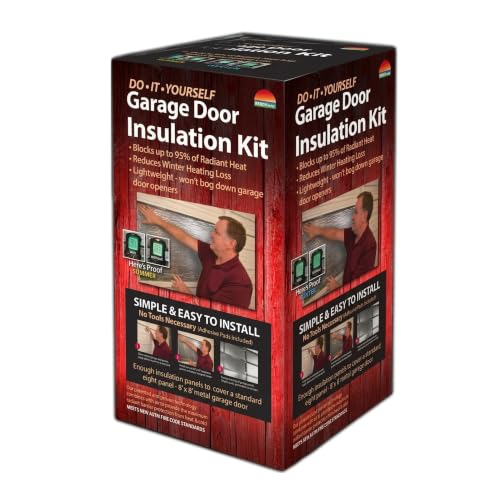
Seven garage insulation kits compared by thickness, coverage and claimed R-value, from a cheap reflective door kit to a full spray foam bundle.

By Taylor DavidsonUpdated 17 min read
On this page
- Best insulation for garage at a glance
- How I screened these seven kits
- Door panel or spray foam: which job are you doing?
- 1. Reach Barrier Garage Door Insulation Kit — Best overall
- 2. US Energy Products NASA TECH White Reflective Foam Core — Runner-up
- 3. INSULATION MARKETPLACE SmartGARAGE — Best for beginners
- 4. MYFAMIREA 16P Garage Door Insulation Kit — Best for small spaces
- 5. Xenjum Garage Door Insulation Kit — Best for heavy use
- 6. BEEST FullStop Spray Foam Insulation Kit — Best premium
- 7. BEEST FULLSTOP Platinum Garage Door Insulation Kit — Best for families
- What do the R-value claims actually mean here?
- How many kits does your door need?
- What the listings leave out
- The verdict
- FAQ
The best insulation for garage doors is the Reach Barrier Garage Door Insulation Kit, an 8-panel reflective kit at 5/32 inch thick that trims with scissors and needs no tools. If you have a double-wide door and want one purchase to cover it, the US Energy Products NASA TECH kit ships four 2ft x 18ft rolls with a claimed R8. Both line the door, which is where most heat moves.
Here is who this guide is not for. If you plan to insulate bare wall cavities or an unfinished ceiling, a door panel kit does nothing for you, and you should jump straight to the spray foam entry below. Everyone else is choosing between reflective and foam-core panels for a metal door, and that is a smaller decision than the listings make it sound.
Best insulation for garage at a glance
| Pick | Thickness | Coverage | Price |
|---|---|---|---|
Best overall Reach Barrier Garage Door Insulation Kit |
5/32 in | 8x8 single door | Check Price |
| Foam core | 18ft W x 8ft H | Check Price | |
Best for beginners INSULATION MARKETPLACE SmartGARAGE |
5mm | Single-car door | Check Price |
Best for small spaces MYFAMIREA 16P Panels 6MM |
6mm | 16x8ft, 16 panels | Check Price |
Best for heavy use Xenjum EPE Foam Kit |
6mm | 16x8ft, 16 panels | Check Price |
Best premium BEEST FullStop Spray Foam Kit |
Spray foam | ~240 board ft | Check Price |
Best for families BEEST FULLSTOP Platinum Door Kit |
Panels + seals | 16x8ft door + edges | Check Price |



How I screened these seven kits
I lined up the published specifications for every pick side by side: thickness, panel count, coverage, and the claimed R-value where the listing states one. Then I sorted by the job each one does, because a spray foam can and a stack of foil panels are not competing for the same wall.
Here is how the seven sorted out:
- Reflective bubble panels. The Reach Barrier and MYFAMIREA kits use foil over an air-bubble core. Cheap, thin, and aimed at radiant heat.
- Foam-core panels. The SmartGARAGE, Xenjum, and NASA TECH kits sandwich closed-cell or EPE foam between foil and film. Thicker, with higher claimed R-values.
- Full opening kits. The BEEST Platinum bundle adds threshold and perimeter seals to the panels.
- Cavity foam. The BEEST FullStop spray kit is a different animal, for walls and attics rather than the door skin.
What I cut on: nothing here was dropped, but I ranked the door-panel kits ahead of the spray foam for the search most people are running. If you searched "best insulation for garage" expecting to line a metal door, six of these seven do that. Only one does not.
Door panel or spray foam: which job are you doing?
This is the fork that decides everything, and it is not about brand or price. It is about the surface you are covering.
- A metal or panelled garage door takes a reflective or foam-core panel kit. You clean the door, cut panels to fit each section, and stick them on. Six of the seven picks do exactly this.
- Bare wall studs or an open ceiling need a fill material. That is the BEEST FullStop spray foam kit, which expands into gaps and bonds to wood, metal, drywall and concrete per the listing.
The best insulation for garage projects is whichever matches the surface in front of you. A door kit on open studs leaves the cavities empty. Spray foam on a moving door panel makes no sense, since the door has to flex and roll.
Most buyers here want the door. It is the single largest uninsulated surface in a typical attached garage, and it is the easiest weekend job. Start there. If the walls are already finished with drywall, the door kit is likely all you need.
1. Reach Barrier Garage Door Insulation Kit — Best overall
The Reach Barrier kit is the best insulation for garage doors for most single-door owners: cheap, tool-free, and sized to one standard door.
Best for: one standard single garage door and first-time installers Skip it if: you have a two-car door or want to insulate bare wall studs
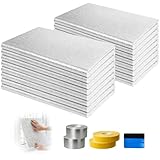
This kit lands first because it does the common job cheaply and without fuss. It is the cheapest of the seven and covers one 8ft x 8ft single door with 8 pre-cut panels, each 24 x 48 inches. Reach Barrier says every panel is 5/32 inch thick with reflective film on both sides and two bubble layers between, aimed at cutting radiant heat.
Installation needs no special tools. You trim panels with scissors or a box knife and stick them with the included one-inch adhesive squares, 48 per panel. The listing calls for a clean, dry, oil-free door surface first, which matters more than anything else for adhesion.
The trade-off is thickness and scope. At 5/32 inch, this is thinner than the 5mm and 6mm foam-core kits, so it leans on reflection rather than mass. It also covers one door only. For a two-car door you buy two kits, which erases the price advantage. Still, it sells faster than every other pick here, and for a single door it is the sensible default.
Pros:
- Cheapest of the seven picks
- 8 pre-cut 24x48 panels sized to a single door
- No tools needed, trims with scissors
- Reflective film on both faces per the listing
- The fastest seller in this set
Cons:
- Thinner than the foam-core kits at 5/32 in
- Covers one single door only
- Reflective panels lean on radiant heat, not mass
- No stated R-value in the listing
2. US Energy Products NASA TECH White Reflective Foam Core — Runner-up
The NASA TECH kit covers a full double door in one buy and claims R8, making it the runner-up for larger openings.

Best for: double-wide doors that need one purchase and a higher claimed R-value Skip it if: you prefer pre-cut panels over cutting from rolls
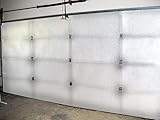
This is the double-door answer. It ships as 4 rolls of 2ft x 18ft foil foam-core insulation covering an 18ft W x 8ft H door, and US Energy Products claims an R8 value along with a vapor barrier and radiant barrier in one product. It sits mid-range in price for this set.
The kit includes heavy-duty double-sided tape, a razor, a squeegee and instructions. The listing notes you must peel the tape liner and let it tack up before pressing, a small step people skip and then blame the tape. It also states the product is made in the USA and meets US and international fire codes.
Two honest marks against it. Only one seller lists it, so your buying options are narrow. And it comes as rolls, not pre-cut panels, so you measure and cut every section yourself, which is more work than the Reach Barrier squares. The reward is single-purchase coverage of a big door with a stated R8, which the reflective panels do not claim.
Pros:
- Covers a full 18ft W x 8ft H double door
- Claims R8 with vapor and radiant barrier
- Includes razor, squeegee and tape
- States it meets US and international fire codes
Cons:
- Only one seller lists it
- Rolls require measuring and cutting, not pre-cut
- Weight not usefully listed
- Tape needs a tack-up step before pressing
3. INSULATION MARKETPLACE SmartGARAGE — Best for beginners
The SmartGARAGE kit is the easiest first project: foam-core sheet with a claimed R-8 and a clean white finish.
Best for: single-door owners who want the simplest possible install Skip it if: you need to cover a double-wide door
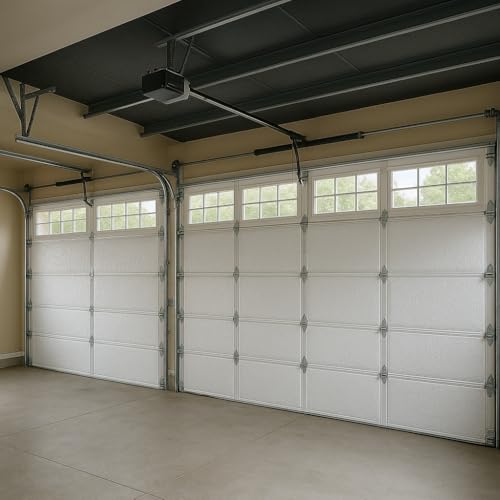
If you have never insulated anything, start here. This kit covers one single-car garage door and uses 5mm closed-cell polyethylene foam sandwiched between engineered foil on one side and white film on the other. It sits in the cheaper half of this set.
The maker claims it reflects 95% of radiant heat with an R-8 value, and pairs the sheet with heavy-duty double-sided tape rated for hot and cold climates. The white film gives a bright, finished interior face, which reads as tidier than bare foil. The listed dimensions are 0.1 x 440 x 21 inches, so it arrives as a long sheet you cut down.
The catch is coverage math. One kit does one single door. For a two-car door you need two, and for a three-car door three, per the listing, so the low price only stays low on a small door. There is also no published warranty here. For a beginner working on a single door, though, foam-core at 5mm is more forgiving and better performing than thin bubble film.
Pros:
- 5mm closed-cell foam with claimed R-8
- White film gives a clean finished face
- Tape rated for hot and cold climates
- Several sellers stock it
Cons:
- Covers one single door per kit
- Needs cutting from a long sheet
- No stated warranty
- 95% reflection is a maker claim, not verified
4. MYFAMIREA 16P Garage Door Insulation Kit — Best for small spaces
The MYFAMIREA kit gives you 16 pre-cut 6mm panels, ideal for smaller doors, sheds and attic patches.

Best for: small doors, sheds and attic patch jobs Skip it if: you want a stated warranty or a finished white face
This kit is flexible on placement. It bundles 16 pre-cut panels of 24 x 48 inches at 6mm thick, with 120 tape strips included, and it sits near the cheap end of this set. The maker describes aluminized film over a polyethylene bubble middle.
The 6mm thickness is the selling point over thin bubble kits. MYFAMIREA argues the 6mm sheet blocks more than a 3mm roll, which stands to reason from mass alone, though the listing states no R-value to prove it. The panels are billed as fire resistant and are pitched for garage doors, attics, warehouses, roofs and car flaps, so leftover panels have a use.
Two honest marks. The panels are silver foil on both sides, so there is no clean white interior look like the SmartGARAGE offers. And there is no stated warranty. It is filed under window insulation kits rather than garage door seals, which tells you it is a general reflective panel adapted to the door. For small or odd surfaces where you want to spread panels around, that flexibility is the point.
Pros:
- 16 pre-cut 24x48 panels at 6mm thick
- 120 tape strips included
- Works on sheds, attics and warehouses too
- One of the cheaper picks here
Cons:
- Silver foil face, no white finish
- No stated warranty
- No published R-value
- Listed as a general window kit
5. Xenjum Garage Door Insulation Kit — Best for heavy use
The Xenjum kit uses triple-layer foil-EPE-foil panels for buildings that see harder conditions than a home garage.

Best for: metal buildings, RVs and sheds wanting thicker foam Skip it if: you are on a tight budget
Xenjum aims wider than a home door. This kit is 16 pre-cut 24 x 48 inch panels at 6mm, built as Foil + EPE + Foil, and the maker suggests it for sheds, attics, warehouses, metal buildings, RVs and pet houses. It is the more expensive of the two 6mm panel kits here.
The construction claim is the differentiator: a foam core between two foil faces, which the maker says keeps a space up to 20°F cooler in summer. Panels are pre-cut to fit standard 16ft x 8ft and 16ft x 7ft single doors and trim for a custom fit with the included tape and scraper. That EPE foam core is denser than a bubble layer, which is why it earns the heavy-use tag over the bubble kits.
The honest downsides. It is priced above the MYFAMIREA kit for the same 6mm and 16-panel spec, so you pay more for the EPE build and the temperature claim. Only one seller lists it, and there is no published warranty or R-value. If you are lining a metal outbuilding rather than a home door, the extra structure is worth considering.
Pros:
- 16 pre-cut 6mm foil-EPE-foil panels
- Rated for metal buildings, RVs and sheds
- Includes tape and a scraper
- Claims up to 20°F cooler in summer
Cons:
- Priced above the matching MYFAMIREA kit
- Only one seller lists it
- No stated warranty or R-value
- Temperature figure is a maker claim
6. BEEST FullStop Spray Foam Insulation Kit — Best premium
The BEEST FullStop kit is the only pick that fills wall and attic cavities, with a Class A fire rating and claimed R-8.24.

Best for: insulating bare walls and attic cavities, not the door Skip it if: you only want to line the door itself
This is the outlier, and the most expensive pick here. It is a 12-can spray foam kit covering roughly 240 board feet, with a Pro X gun, cleaner and safety gear included, weighing 26.6 lb in the box. It sells faster than the rest of this set despite the price.
BEEST describes a hybrid formula with a closed-cell outer skin for strength and moisture resistance plus open-cell expansion, and claims Class A fire-rated performance meeting ASTM E84 with an R-8.24 figure. It bonds to wood, metal, drywall, concrete and brick per the listing, and expands best in the stated 68 to 77°F range. This is the tool for open studs and gaps, not a door panel.
The trade-off is obvious once you name it: it does not insulate the door at all. If your door is the problem, this is the wrong buy. It also demands more from the user than sticking panels, with temperature limits, safety gear and a curing process. For an unfinished garage where the walls and ceiling are open, though, it is the only pick that fills those cavities.
Pros:
- Covers ~240 board feet from 12 cans
- Claims Class A fire rating and R-8.24
- Bonds to wood, metal, drywall and concrete
- Includes gun, cleaner and safety gear
Cons:
- Most expensive pick in this set
- Does nothing for the garage door itself
- Needs a 68 to 77°F application window
- Only one seller lists it
7. BEEST FULLSTOP Platinum Garage Door Insulation Kit — Best for families
The BEEST Platinum kit seals the whole opening, adding threshold, perimeter and window seals to the door panels.

Best for: sealing an entire door opening against drafts, pests and water Skip it if: you only need panels and nothing extra
This one thinks about the gaps, not just the panels. It covers a double door up to 16ft x 8ft with 16 pre-cut 24 x 48 inch white closed-cell foam panels, then adds a bottom threshold seal, 34.5 ft of top and side weather stripping with 40 screws, four window films and two door draft stoppers. It sits in the premium price group.
That bundle is why it suits a family garage used as a play space or laundry room. BEEST claims up to a 10 to 15°F door-surface improvement and 95% radiant reflection, and the threshold seal is pitched to block water, leaves, cold drafts and pests sliding under the door. The white vinyl face gives a clean interior look.
The honest marks. Only one seller lists it, and it is priced above the plain panel kits because you are paying for the seals as much as the panels. If your door already has good bottom and edge seals, you are buying parts you will not use. But if drafts and bugs get in around the edges, sealing the whole opening does more than panels alone.
Pros:
- 16 white panels plus threshold and edge seals
- 34.5 ft top and side stripping with 40 screws
- Includes window films and draft stoppers
- Blocks drafts, water and pests per the listing
Cons:
- Only one seller lists it
- Priced above plain panel kits
- Redundant if your door already seals well
- Temperature figures are maker claims
What do the R-value claims actually mean here?
Two of these kits print an R-value and most do not, so the numbers deserve a plain read. R-value measures resistance to heat flow, and higher is better. But a claimed figure on a listing is the maker's number, not an independent measurement, so treat it as a comparison point, not gospel.
- The NASA TECH and SmartGARAGE kits both claim R8.
- The BEEST FullStop spray foam claims R-8.24.
- The Reach Barrier, MYFAMIREA and Xenjum kits state no R-value at all.
That gap matters less than it looks. The reflective bubble kits work mainly by reflecting radiant heat, which R-value does not capture well. A thin foil panel can still block a lot of summer sun load on a metal door even with a modest conductive R-value. So a missing R-value on the Reach Barrier kit is not a strike against it for a hot garage. If you live somewhere with hard winters, lean toward the thicker foam-core and stated-R kits, since cold is a conductive problem where mass and R-value earn their keep.
How many kits does your door need?
Coverage is where people overspend or underbuy, so match the kit to your door before you check out. Measure your door width first.
- Single door, about 8 to 9 ft wide. One Reach Barrier kit or one SmartGARAGE kit covers it.
- Double door, up to 16 ft wide. One NASA TECH kit (18 ft of rolls), one MYFAMIREA 16-panel kit, one Xenjum 16-panel kit, or the BEEST Platinum bundle each cover it.
- Three-car door. The SmartGARAGE listing states you need three of its kits, so price that out before committing.
The best insulation for garage doors is only cheap if you buy the right count. A single-door kit bought twice for a double door often costs more than a purpose-made double kit. The Reach Barrier is the cheapest here per the set, but that price assumes one single door. For a 16 ft door, the pre-cut 16-panel kits or the NASA TECH rolls give you full coverage in one box, which is simpler and usually the better value.
What the listings leave out
A few things these product pages do not tell you, and you should plan around them.
- Surface prep is on you. Nearly every kit says the door must be clean, dry and oil-free before the tape goes on. That step, not the tape brand, decides whether panels stay up.
- Panels do not touch the wall cavities. A door kit insulates the door only. Cold coming through uninsulated walls needs the spray foam or a separate batt job.
- Weight data is thin. The NASA TECH kit lists its weight as 0, which is a data gap, not a real figure, so do not read anything into it.
- Adhesive lifespan varies with heat. Several makers flag high-temperature tape, which hints that heat can loosen cheaper adhesives over time on a sun-facing door.
None of these is a dealbreaker. They are the difference between a job that lasts and panels drooping by next summer.
The verdict
If you are insulating one standard single garage door, buy the Reach Barrier Garage Door Insulation Kit. It is the cheapest of the seven, ships 8 pre-cut 24 x 48 inch panels at 5/32 inch, installs with scissors and adhesive squares, and it is the fastest-selling pick here. For the most common job, it is the right default.
The cutoff is door width and surface. If your door is a double, up to 16 ft wide, the US Energy Products NASA TECH kit covers it in one purchase with 4 rolls of 2ft x 18ft foam core and a claimed R8, which the reflective Reach Barrier panels do not match on stated resistance. That single-buy double coverage is its exact advantage.
If you are not insulating the door at all but filling open wall studs or an attic, neither panel kit helps. The BEEST FullStop spray foam kit is the one that fills cavities, with a Class A fire claim and R-8.24 across roughly 240 board feet. And if edge drafts and pests are your real complaint, the BEEST Platinum bundle seals the whole opening. Match the kit to the surface, then to the width, and the choice makes itself.
FAQ
Is garage door insulation worth the money?
Garage door insulation is worth it when the door is a large uninsulated metal surface, which describes most attached garages. It is a cheap weekend job, and the panel kits here reflect radiant heat and slow conductive loss. It will not turn an unheated garage into a room, but it steadies the temperature near the door noticeably.
What is the best insulation for garage doors on a budget?
The best insulation for garage doors on a budget is the Reach Barrier kit, the cheapest of these seven. It covers one 8x8 single door with 8 pre-cut 5/32 inch panels and needs no tools. Just remember one kit covers one single door, so a double door needs two, which changes the math.
How does foam core compare to reflective bubble insulation?
Foam core compared to reflective bubble comes down to thickness and mechanism. The 5mm and 6mm foam-core kits, like SmartGARAGE and Xenjum, add mass and two claim R8. The Reach Barrier bubble panels at 5/32 inch lean on radiant reflection. For hot climates both help; for cold winters, the thicker foam-core kits with a stated R-value have the edge.
Can I insulate garage walls with a door kit?
You cannot insulate garage walls with a door kit. Panel kits stick to the flat door skin and do nothing for open wall cavities. For bare studs or an attic, the BEEST FullStop spray foam kit is the right tool, covering roughly 240 board feet and bonding to wood, drywall and concrete per the listing.
Reach Barrier or NASA TECH for a two-car garage?
For a two-car garage, the NASA TECH kit wins. It covers a full 18ft W x 8ft H double door in one purchase with 4 foam-core rolls and a claimed R8. The Reach Barrier kit is single-door only, so a double door needs two kits, which usually costs more and takes longer than one purpose-made double kit.
Measure your door width today, then decide between one single-door kit and one double kit before you look at anything else, because coverage drives both the price and the effort. For the typical single metal door, the Reach Barrier kit is the default worth starting with: it is cheap, it installs with household scissors, and it targets the radiant heat that hits a door hardest in summer. Match the kit to your surface and width, prep the door properly, and you get steadier garage temperatures from a short afternoon of work.