Best Wall Insulation: Frost King CF1 Leads
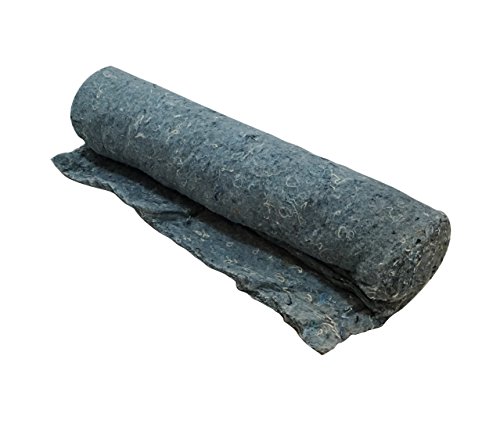
A ranked shortlist of seven wall insulation rolls and panels, matched to real jobs: gap-stuffing, RV builds, home studios, and cold exterior walls.

By Taylor DavidsonUpdated 17 min read
On this page
- Best wall insulation at a glance
- How I screened the shortlist
- What actually decides wall insulation?
- 1. Frost King CF1 Cotton Multi-Purpose — Best overall
- 2. Frost King SP1 Fiberglass Insulation Roll — Best for heavy use
- 3. Reflectix BP24025 Bubble Pack Insulation — Best for families
- 4. FONUNO Bubble Insulation Sheet — Best for beginners
- 5. SD SODOCT Pyramid Acoustic Foam — Best compact
- 6. Bhyhok RV Camper Insulation Roll — Most versatile
- 7. Maasechs 5mm Thermal Wallpaper — Best premium
- Foam, fiberglass, cotton or foil: which belongs in your wall?
- Coverage math: how much do you actually need?
- What the listings don't tell you
- The verdict
- FAQ
The best wall insulation for most jobs is the Frost King CF1 "No Itch" Natural Cotton Multi-Purpose roll, a 16 x 48 in cotton strip that cuts with scissors, handles without gloves, and stuffs into the cavities where itchy fiberglass makes life miserable. For larger reflective coverage in a crawl space, attic or garage, the Reflectix BP24025 takes over at 24 in wide and 25 ft long.
Best wall insulation at a glance
| Pick | Format | Coverage | Price |
|---|---|---|---|
Best overall Frost King CF1 Cotton Multi-Purpose |
Cotton strip | 16 x 48 in | Check Price |
Best for heavy use Frost King SP1 Fiberglass Roll |
Fiberglass strip | 16 x 48 in, 3/4 in thick | Check Price |
Best for families Reflectix BP24025 Bubble Pack |
Reflective bubble roll | 24 in x 25 ft | Check Price |
Best for beginners FONUNO Bubble Insulation Sheet |
Reflective bubble roll | 23.6 in x 10 ft | Check Price |
Best compact SD SODOCT Pyramid Acoustic Foam |
Foam panels | 24 pack, 12 x 12 x 2 in | Check Price |
Most versatile Bhyhok RV Camper Insulation Roll |
Non-woven fibrous roll | 16.5 x 315 in | Check Price |
Best premium Maasechs 5mm Thermal Wallpaper |
Peel-and-stick foam | 20 x 197 in, 5mm thick | Check Price |




How I screened the shortlist
I started with the top listings under three overlapping categories: window insulation kits, HVAC weatherproofing and acoustical wall treatments. The keyword "best wall insulation" pulls a strange mix on Amazon, because the marketplace does not sort by R-value or by whether a product goes inside a wall cavity versus over a finished surface. That is the first thing to know: the search is not filtering the way a building supplier would.
Three cuts got me to seven picks.
- Cut one: real product, not a sample. Anything that shipped in a size too small to insulate more than a light switch cover was out.
- Cut two: published dimensions. Every pick lists a width and length or a panel count, so you can plan a job before you buy.
- Cut three: a job it clearly does. Each surviving pick fits one of four buyer profiles: gap-stuffing, sheet coverage, acoustic treatment, or vehicle builds.
What survived is the seven products above, ranked by how often the profile they serve comes up in a home. Cotton and fiberglass strips lead because most people searching for wall insulation are trying to plug a specific cold spot, not sheath a stud bay.
What actually decides wall insulation?
Most guides compare R-value. That is not what decides it here, because none of these seven products publishes a rated R-value in the listing data, and asserting one from memory would be a guess. The real deciding criterion is which wall you are insulating and whether you can open it.
Wall insulation splits into three jobs:
- Inside an open cavity, before drywall goes up. The Frost King cotton and fiberglass strips fit here, sized to slide between 16 in on-centre studs.
- Behind or against a finished surface, in a crawl space, garage, van or metal building. Reflective bubble rolls and the Bhyhok fibrous roll fit here.
- On top of a finished wall, where you cannot open anything up. That is the Maasechs foam wallpaper and the SD SODOCT acoustic panels.
Get the job right and any of the seven works for its intended use. Get it wrong and even the priciest pick underdelivers. A peel-and-stick foam sheet will not stop heat loss through an uninsulated stud bay, and a fiberglass strip will not fix a bare drywall echo in a podcast room. Match the format to the wall first, then compare specs.
1. Frost King CF1 Cotton Multi-Purpose — Best overall
A 16 x 48 in cotton strip that cuts with scissors, needs no gloves or mask, and slides straight into the cavities where fiberglass makes you itch for hours.
Best for: stuffing gaps around pipes, outlets and rim joists without protective gear Skip it if: you need to cover a full wall in one pass
The CF1 wins because it solves the single most common wall-insulation problem: the small, awkward cavity that nobody wants to attack with itchy pink fiberglass. The strip measures 16 in wide by 48 in long, which slots directly into standard stud spacing, and Frost King says it can be cut or ripped to fit pipes, ducts and walls. The listed weight is 0.6 lb, which tells you this is a low-density product designed to fill space and dampen sound, not to hit a high R-value.
The trade-off is scale. This is a single strip, the cheapest of the seven, and one unit will not sheath a room. For an accessory wall, a rim joist run, or the void behind a bathtub, one or two rolls is often enough. For a full wall build, you would stack several. It also carries a stated warranty, which the reflective rolls and the acoustic foam mostly do not.
Pros:
- No gloves, mask or goggles needed to handle
- Fits 16 in on-centre stud cavities
- Cuts and rips cleanly with basic tools
- Doubles for pipe wrap and sound dampening
- Cheapest pick in the shortlist
Cons:
- One strip covers a small area only
- No published R-value in the listing
- Not for continuous sheet coverage
2. Frost King SP1 Fiberglass Insulation Roll — Best for heavy use
A 16 x 48 in fiberglass strip, 3/4 in thick, aimed at heat-heavy jobs like duct wrap, water pipes and car hoods where cotton will not hold up.

Best for: wrapping heating ducts, water pipes and car hoods where heat resistance matters Skip it if: you dislike handling fiberglass or lack gloves and a mask
The SP1 is the CF1's tougher sibling. Same 16 x 48 in footprint, same brand, but the material is fiberglass at a stated 3/4 in thickness, released in 2021, and it carries the standard Frost King manufacturer warranty. Fiberglass tolerates heat that cotton does not, which is why the listing points to car hoods and heating ducts alongside walls. In a wall cavity around a chimney chase, a boiler flue or a furnace closet, this is the safer material.
Handling is the trade-off. Fiberglass demands gloves, long sleeves and a mask, and Frost King notes the fibers themselves in the marketing rather than pretending otherwise. In this set of seven, only the CF1 cotton lets you skip protective gear entirely. The SP1 also comes as a single strip, so treat it as a targeted fix rather than a bulk buy. It is the second-cheapest of the seven, which makes it an easy add-on when you already have the CF1 in the cart.
Pros:
- Fiberglass handles heat that cotton cannot
- Same 16 x 48 in cavity-friendly size
- Carries a Frost King manufacturer warranty
- Doubles for duct wrap and pipe insulation
Cons:
- Requires gloves, sleeves and a mask
- Single strip, not a bulk roll
- Fiber shedding needs cleanup
3. Reflectix BP24025 Bubble Pack Insulation — Best for families
A seven-layer reflective bubble roll, 24 in wide by 25 ft long, sized to cover a crawl space, garage wall or metal building in one pass.

Best for: crawl spaces, garage walls and pole barns where a long reflective roll earns its keep Skip it if: you expect an R-value that replaces batt insulation
Reflectix is the coverage pick. At 24 in by 25 ft it delivers 50 sq ft in a single roll, which is why the listing calls it out for crawl spaces, attics, walls, metal buildings and post-and-frame structures. Reflectix says the product is built from seven layers: two outer aluminum foil skins, two polyethylene bonding layers, two inner bubble sheets and a polyethylene core. That construction is what lets it reflect radiant heat and hold up while you staple or tape it into place.
It is fiber-free, so unlike the SP1 you do not need respiratory gear to install it, and the listing weight of 1 lb keeps it easy to handle overhead. The trade-off is expectations. Reflective bubble insulation is a radiant barrier, not a thick cavity fill, and it works best when it faces an air gap. Against a solid wall with no gap, its effectiveness drops. In this set it sits at mid-range on price, more expensive than the two Frost King strips but cheaper than the RV roll or the peel-and-stick foam.
Pros:
- 50 sq ft coverage in one roll
- Fiber-free, no mask required
- Seven-layer build claimed for durability
- Works on walls, crawl spaces and metal buildings
- Cuts easily with a utility knife
Cons:
- Needs an air gap to work best
- No published R-value in the listing
- Reflective foil scratches under abrasion
4. FONUNO Bubble Insulation Sheet — Best for beginners
A 23.6 in by 10 ft reflective bubble roll with double-sided foil, sized for a first insulation job on a single window, garage door or shed wall.

Best for: first-time DIYers taping a reflective layer over a window, garage door or shed wall Skip it if: you need more than 10 feet of coverage in a single roll
The FONUNO roll is the beginner path into reflective insulation. It runs 23.6 in wide by 10 ft long, roughly a fifth the length of the Reflectix but at nearly the same width, so it fits garage door panels, single windows and small shed walls without the offcuts you get from a bigger roll. FONUNO says the sheet uses aluminum film over polyethylene bubbles with a punched-hole surface pattern for reflectivity, and the listing includes double-sided tape for installation.
Two things make this the right first buy. First, the 10 ft length is small enough to handle solo without a helper holding the roll. Second, the included tape means you can install without a separate trip for adhesive. The trade-offs: only one seller lists it, and the roll is short. If your wall runs longer than 10 ft you will be seaming pieces together, and seams are where reflective insulation leaks its performance. Treat this as a starter kit, then step up to Reflectix for a bigger job.
Pros:
- Manageable 10 ft length for solo install
- Double-sided tape included
- Double-sided reflective foil finish
- Waterproof surface per the listing
Cons:
- Only one seller stocks it
- 10 ft length seams on larger walls
- No stated warranty in the listing
5. SD SODOCT Pyramid Acoustic Foam — Best compact
Twenty-four 12 x 12 in pyramid foam tiles, 2 in thick, for treating a single wall in a studio, podcast room or gaming corner.

Best for: home studios, podcast corners and gaming rooms killing echo on a single wall Skip it if: you want thermal insulation instead of acoustic treatment
This is the acoustic answer in the set. Twenty-four pyramid tiles, each 12 x 12 x 2 in, adding up to 24 sq ft of coverage. The pyramid geometry increases surface area, which SD SODOCT says improves absorption and diffusion of mid and high frequencies. In practice that means less flutter echo off a bare drywall wall, cleaner voice recordings and a tighter feel when a game is running through good speakers.
Two clarifications matter. This is not thermal insulation, and nothing in the listing claims it is. It is a sound absorber, and the sales rank of 171 in acoustical treatments makes it the fastest seller of the seven in its own category. The other clarification: this pack ships without adhesive, so budget for spray glue or command strips. The tiles carry a stated six-month return warranty, which is longer than any of the reflective rolls in this shortlist, and the format lets you cover exactly the wall area you need rather than committing to a full roll.
Pros:
- 24 sq ft coverage in one pack
- Pyramid shape boosts absorption per the listing
- Six-month return warranty
- Cut individually to fit any wall shape
- Fastest seller in its category
Cons:
- No adhesive included in the pack
- Acoustic only, not thermal
- Foam yellows with sun exposure
6. Bhyhok RV Camper Insulation Roll — Most versatile
A 16.5 x 315 in non-woven fibrous roll with water-resistant fabric on both sides, sized for van conversions and RV wall builds.

Best for: van conversions, trucks and RVs needing a water-resistant thermal and sound layer Skip it if: you want a finished interior surface, not a hidden layer
The Bhyhok roll is the specialist. At 16.5 in wide and 315 in long, that is over 26 ft of continuous insulation, which lines out a Sprinter van wall or an RV cabinet run without seams. Bhyhok says the core is fibrous, sandwiched between two non-woven water-resistant fabric layers, and pitched for both thermal and sound roles against road noise. In a moving vehicle both matter, and the water-resistant claim addresses the condensation problem that ruins wall insulation in vans.
Versatility is the point. The 16.5 in width fits most van rib spacing, and the material cuts with scissors around wheel wells and door panels. The trade-off is scope: it is designed to sit behind a wall panel, not to show. If you are looking at a full domestic wall build, the Reflectix or Frost King picks are cheaper for the same job, and the Bhyhok is one of two picks in the premium price band without a stated warranty in the listing. Buy it for a vehicle, not a bedroom.
Pros:
- 26 ft continuous length
- Water-resistant fabric on both faces
- Fits van and RV rib spacing at 16.5 in wide
- Cuts easily around curves and wheel wells
Cons:
- No stated warranty in the listing
- Only one seller stocks it
- Overkill for a static domestic wall
7. Maasechs 5mm Thermal Wallpaper — Best premium
A 20 in by 197 in peel-and-stick foam roll, 5mm thick, that adds a thin insulating and sound-absorbing layer over a finished wall without demolition.

Best for: renters covering a cold or noisy wall with a peel-and-stick finish Skip it if: you need a code-rated insulation product
The Maasechs roll is the odd one out and useful precisely because of it. Every other pick either hides inside a cavity or sticks to the back of a surface. This one is the finish. It is a 20 x 197 in foam sheet, 5mm thick, with a self-adhesive backing and a matte white surface. Maasechs says it covers about 26.9 sq ft per roll, and the listing points to reducing heat conduction through walls, cutting noise transmission and hiding cracks or stains.
It is the most expensive pick here, and the slowest seller of the seven by sales rank. That combination tells you the buyer is specific: a renter, a small child's bedroom against a cold exterior wall, a home office wall that echoes into a video call. In those cases the peel-and-stick format wins because you do not need to open the wall, hire anyone, or repaint afterwards. In a construction context, none of that matters and the cheaper cavity products beat it. There is no stated warranty in the listing.
Pros:
- 26.9 sq ft coverage per roll
- Peel-and-stick, no glue needed
- Matte white finish acts as final surface
- Combines thermal and acoustic claims
Cons:
- Most expensive pick in the set
- Slowest seller of the seven
- No stated warranty in the listing
- Not a code-rated insulation product
Foam, fiberglass, cotton or foil: which belongs in your wall?
The seven picks split into four materials, and the material decides more than the brand does.
- Cotton (Frost King CF1): safe to handle bare-handed, low density, good for gap-stuffing and light sound work.
- Fiberglass (Frost King SP1): heat-tolerant, higher density, but demands protective gear on install.
- Reflective foil bubble (Reflectix BP24025, FONUNO): works by reflecting radiant heat, needs an air gap, thin and lightweight.
- Non-woven fibrous with fabric skin (Bhyhok): purpose-built for vehicles, water-resistant, combines thermal and acoustic.
- Foam (SD SODOCT, Maasechs): absorbs sound, adds a thin thermal break, works on a finished surface.
If you can open the wall and you are in a house, cotton or fiberglass is the honest answer for the cavity, with foam or wallpaper only if you want a decorative acoustic finish afterwards. If you cannot open the wall, foil bubble against a firred-out cavity or peel-and-stick foam on the surface are your only paths. If you are in a vehicle, the Bhyhok roll is designed for the specific water and vibration conditions that ruin domestic products.
Coverage math: how much do you actually need?
Insulation is one of the few home purchases where undersizing the order costs a return trip and a seam. Do the math before you buy.
- Measure the wall area in square feet. Height times width, minus windows and doors.
- Match to the roll or pack coverage. Reflectix covers 50 sq ft per roll, FONUNO covers roughly 19.7 sq ft, Bhyhok covers roughly 36 sq ft, Maasechs covers 26.9 sq ft, SD SODOCT covers 24 sq ft per 24-pack, and the two Frost King strips cover just over 5 sq ft each.
- Add 15% for offcuts and seams. Reflective foil especially wastes at corners and around outlets.
- Round up to whole units. Half a roll of Reflectix cut to size does not exist on the shelf.
- Check the width first, not the length. A 16 in cavity fits the two Frost King strips exactly, and a 16.5 in vehicle rib fits the Bhyhok. Reflective rolls at 23.6 and 24 in are wider and work better on open faces.
Once you have the number of units, price becomes real. Two Frost King strips and one FONUNO roll cost very differently from one Reflectix roll or one Maasechs roll, and only the math tells you which route is cheaper for your wall.
What the listings don't tell you
Amazon listings for insulation share three blind spots. First, R-value is almost never published in this category. None of the seven picks states one in its listing data, so any product page that quotes an R-value in a review comment should be treated as a customer estimate. If you need a specific R-value for a permit or a building inspector, buy from a building supplier that publishes the certified figure on the product data sheet.
Second, fire ratings are absent. Wall insulation in occupied spaces should meet a flame-spread rating, and none of the seven listings supplies one. That is fine for pipe wrap, van builds and small acoustic treatments, and it is not fine if you are enclosing insulation permanently inside a domestic wall.
Third, vapor and moisture behaviour is implied, not measured. The Bhyhok listing says "water-resistant" and the Reflectix listing calls its outer skin polyethylene-bonded aluminum foil. Neither is a vapor barrier in the building-science sense. In a cold-climate exterior wall, you want a permeance rating; you will not find one here.
The practical takeaway: these are consumer-grade insulation products for consumer-grade jobs. Cavity fills in accessory spaces, garage walls, van conversions, acoustic treatments, renter-friendly surface layers. For a code-inspected exterior wall build, treat this shortlist as a source of secondary layers only.
The verdict
The Frost King CF1 Cotton Multi-Purpose wins because it does the single most common wall-insulation job well and safely. Its 16 x 48 in size drops into 16 in on-centre stud cavities, cuts with scissors, and needs no gloves or mask. It is the cheapest of the seven and it carries a Frost King warranty, which puts it ahead of the reflective rolls that share its price band.
Two conditions flip the choice. If the wall needs to handle heat, from a chimney chase, a boiler flue or a duct run, step up to the Frost King SP1 fiberglass strip in the same size for the temperature tolerance cotton lacks. If the wall is a long continuous run in a crawl space, garage, pole barn or metal building, the Reflectix BP24025 at 24 in by 25 ft delivers 50 sq ft in one pass, which no other pick in the seven can match without seaming.
For vehicle builds, the Bhyhok roll is the only pick engineered for vans. For a studio wall, SD SODOCT foam is the only acoustic pick. For a renter, the Maasechs peel-and-stick foam is the only surface finish. Each is the right answer to a different question.
FAQ
What is the best wall insulation for a small gap around a pipe?
The best wall insulation for a small pipe gap is the Frost King CF1 cotton strip, sized 16 in by 48 in and rated to cut or rip to fit pipes and ducts per the listing. Cotton handles bare-handed, so you can push it into an awkward space without gloves, and one strip is often enough for several rim joist penetrations or the void behind a bathtub.
Is reflective bubble insulation worth it on a wall?
Reflective bubble insulation is worth it on a wall when the assembly includes an air gap in front of it, which is how Reflectix's seven-layer product is designed to reflect radiant heat. Against a solid finished surface with no gap, the reflective effect drops. It shines in crawl spaces, garage walls, pole barns and metal buildings where a firred cavity leaves room for the air layer to work.
How does the Frost King CF1 compare to the SP1?
The Frost King CF1 and SP1 share the same 16 x 48 in strip format and the same manufacturer warranty, but the material differs. The CF1 is cotton, so it handles without gloves or a mask, at the lowest price in the seven-pick set. The SP1 is fiberglass, 3/4 in thick, and tolerates heat that cotton cannot, which is why it doubles for duct wrap and car hoods.
Can peel-and-stick foam wallpaper replace real wall insulation?
Peel-and-stick foam wallpaper cannot replace real wall insulation in a code sense, and the Maasechs listing does not claim to. At 5mm thick it adds a thin thermal break and a matte white finish over an existing wall, which helps a cold or noisy interior surface. For a permit-inspected exterior wall build, you need a code-rated cavity product with a published R-value, and this is not that.
What is the best wall insulation for a van conversion?
The best wall insulation for a van conversion in this shortlist is the Bhyhok RV Camper Insulation Roll, sized 16.5 in by 315 in with water-resistant non-woven fabric on both faces. The width fits typical van rib spacing, the 26 ft length runs a full wall without seams, and the fabric skin resists the condensation that ruins domestic insulation inside a moving vehicle.
If you are still deciding, start with the Frost King CF1 and add a second material only when the job demands it: fiberglass for heat, reflective foil for large open areas, foam for finished surfaces you cannot open. Most wall insulation projects fail not because the product was wrong but because the buyer ordered one roll of the wrong format and tried to make it fit everywhere. Measure the wall, name the job in one sentence, then buy the pick from the seven that answers that sentence. That order works. The reverse order, buying first and measuring after, rarely does.