Best Wood Planers When Shop Space Is Tight
Five wood planers ranked by what actually decides the buy: benchtop versus handheld, cutterhead type, and how much floor space you can spare. The DEWALT DW735X leads, but three picks flip that verdict.

By Taylor DavidsonUpdated 13 min read
On this page
- Best wood planers for the money at a glance
- How I sorted a mixed field into one ranking
- 1. DEWALT Thickness Planer — Best overall
- 2. WOODERS 13-Inch Benchtop Thickness Planer — Best for pros
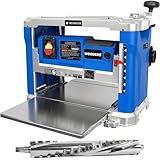
- 3. WOODERS 13-Inch Thickness Planer with Spiral Helical — Best for beginners
- 4. VEVOR Electric Hand Planer — Runner-up
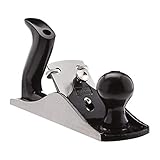
- 5. Amazon Basics Woodworking Hand Planer — Best budget pick
- Benchtop or handheld: which one do you actually need?
- What does a spiral cutterhead change?
- How much bench and floor space will each one eat?
- What the listings leave out
- The verdict
- FAQ
The best wood planers for the money, judged by what fits a working shop, is the DEWALT DW735X, a 13-inch thickness planer with a 15-amp motor and a three-knife cutterhead. If floor space is your real limit, the VEVOR 3-1/4-inch electric hand planer weighs 6.61 lb and needs no bench at all. Every pick here does a different job. Space is the first thing that splits them, and the price differences track that split closely.
Best wood planers for the money at a glance
| Pick | Type | Cut width | Price |
|---|---|---|---|
Best overall DEWALT Thickness Planer |
Benchtop thickness | 13 in | Check Price |
Best for pros WOODERS 13-Inch Benchtop Thickness Planer |
Benchtop thickness | 13 in | Check Price |
Best for beginners WOODERS 13-Inch Thickness Planer with Spiral Helical |
Benchtop, spiral head | 13 in | Check Price |
Runner-up VEVOR Electric Hand Planer |
Handheld electric | 3-1/4 in | Check Price |
Best budget pick Amazon Basics Woodworking Hand Planer |
Manual bench plane | 2 in blade | Check Price |



How I sorted a mixed field into one ranking
This is not a set of five identical machines. Two are 13-inch benchtop thickness planers. One is a corded handheld planer. One is a manual bench plane you push by hand. They share a search page, not a job.
So I set the criteria before ranking anything, and weighted them for a real shop:
- What the tool actually does. A thickness planer dimensions a whole board to a set thickness. A handheld or manual plane shaves a surface. That gap decides most of the ranking.
- Footprint and weight. Space is the constraint most buyers underestimate. The DEWALT is 102 lb; the manual plane is 2.66 lb.
- Cutterhead and blade setup. Three knives, dual blades, a spiral head, or a single hand blade. Each changes finish and upkeep.
- Price position within this set, judged against what the tool can do, not in isolation.
I did not cut anything on quality here, because the field is small. Instead I ranked each pick against the buyer it truly fits. A word on the search term itself: "for the money" is a judgment about value, and value depends on your job. A 2.66 lb hand plane and a 102 lb thickness planer can both be the smart buy, for different people. I've said where each one earns its keep rather than crowning a single value champion.
1. DEWALT Thickness Planer — Best overall
The DEWALT DW735X is the pick for a small shop that dimensions rough lumber and wants repeatable thickness without fuss.

Best for: a small shop that dimensions rough lumber often Skip it if: you can't spare a dedicated stand for its 102 lb body
What sets this one apart in the group is the drive detail. DEWALT lists a 15-amp, 20,000 RPM motor and a two-speed gearbox that switches between 96 and 179 cuts per inch. That second speed is the finish pass, and none of the other powered picks here offer a selectable feed rate. The three-knife cutterhead is DEWALT's claimed route to 30% longer knife life and quicker changes.
The 13-inch width matches the two WOODERS benchtop units, so capacity is not the separator. The base is. DEWALT states a 19-3/4 inch cast aluminum base it calls twice as rigid as a standard 10-inch base, and fan-assisted chip ejection to clear shavings off the cutterhead. Rigidity is what keeps snipe down over a long board.
The trade-off is blunt. At 102 lb it is the heaviest pick here and sits at the top price position of the five. You are paying for the two-speed gearbox and the base, not extra width.
Pros:
- 15-amp, 20,000 RPM motor per DEWALT's listing
- Two feed speeds at 96 or 179 CPI
- Three-knife head claimed for 30% longer knife life
- 19-3/4 in cast aluminum base for rigidity
- Fan-assisted chip ejection
Cons:
- Heaviest pick at 102 lb
- Highest price position in this set
- Only one seller lists it
- Straight knives, not a spiral head
2. WOODERS 13-Inch Benchtop Thickness Planer — Best for pros
This WOODERS benchtop planer is the daily-driver pick, landing a 13-inch capacity at a mid price position.

Best for: daily production work at a mid price position Skip it if: you want the smoothest possible finish out of the box
Here is the value case in this set. WOODERS lists a 15-amp, 2000W all-copper motor and a 10,000 RPM cutterhead, and it does that at the third-cheapest price of the five while matching the DEWALT's 13-inch width. For a pro watching outlay, that is the pitch.
The spec sheet backs a working shop. WOODERS states a height range from 1/4 to 6.3 inches, an anti-snipe dual-blade system, and an oversized depth-adjustment crank with a high-visibility indicator. At 60 lb it is the lightest of the three benchtop planers, which matters if you move it off the bench between jobs. The listing also includes two spare blades in a storage box.
The gap against the DEWALT is real. This one runs a single feed speed, so there is no dedicated finish pass, and the dual straight blades won't match a spiral head for tear-out on figured grain. It sells slower than the DEWALT within its category, too.
Pros:
- 15-amp, 2000W motor per WOODERS
- 13-in width at a mid price position
- Lightest benchtop pick at 60 lb
- Two spare blades included per listing
- Height range 1/4 to 6.3 in
Cons:
- Single feed speed, no finish setting
- Straight blades, more tear-out risk than a spiral head
- The slowest-selling powered pick here
- Only one seller lists it
3. WOODERS 13-Inch Thickness Planer with Spiral Helical — Best for beginners
This spiral-head WOODERS is the pick for a first planer when tear-out is the thing you're most nervous about.
Best for: a first planer where tear-out worries you most Skip it if: your budget can't reach the premium tier
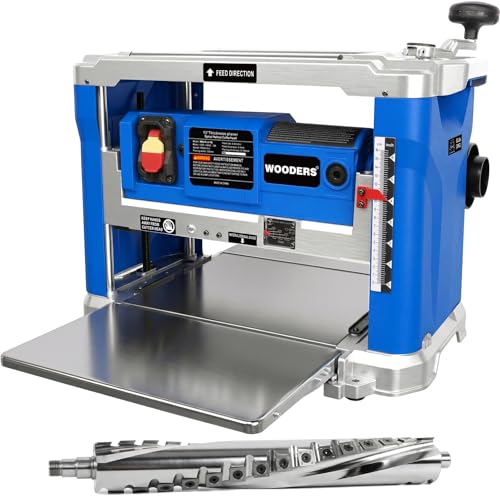
The single feature that separates this pick is the cutterhead. It is the only powered planer in this set with a spiral helical head, which WOODERS builds from 45# steel and fits with tungsten carbide inserts in a staggered multi-edge pattern. Those inserts shear the wood at an angle rather than chopping across it, which is what a beginner wants on figured or knotty stock.
The rest of the sheet mirrors the other WOODERS: a 15-amp, 2000W all-copper motor, 10,000 RPM, and a 13-inch width with a material height range from 1/4 to 6-1/4 inches. WOODERS also lists micro-adjustable depth control and a heavy-duty aluminum top cover for cooling. At 62 lb it weighs about the same as its dual-blade sibling.
The catch is the price. This sits in the premium tier alongside the DEWALT, so a beginner pays up front for the spiral head. It is also the slowest seller of the group by a wide margin, so real-world feedback is thin.
Pros:
- Only powered pick with a spiral helical head
- Carbide inserts for cleaner cuts on figured grain
- Micro-adjustable depth control per WOODERS
- 15-amp, 2000W motor and 13-in width
- Aluminum top cover for cooling
Cons:
- Premium price position, no cheaper than the DEWALT
- Slowest-selling pick in the set
- Only one seller lists it
- Carbide inserts cost more to replace than knives
4. VEVOR Electric Hand Planer — Runner-up
The VEVOR hand planer is the pick when you have no bench footprint to give up and mostly work edges and doors.

Best for: edge work and door trimming with no bench footprint Skip it if: you need to thickness boards to a set dimension
This is a different animal, and that is the point. A handheld planer goes where a benchtop machine can't, and at 6.61 lb the VEVOR is something you carry to the work. VEVOR lists a 710W, 6-amp all-copper motor at 16,500 RPM, which is the fastest quoted spindle speed in this whole group.
For its job the spec fits. The 3-1/4 inch cut width suits chamfers, door edges and quick stock removal. VEVOR states an adjustable depth from 0 to 5/64 inch, HSS blades in W18Cr4V steel rated at 58HRC or higher, and a dust bag to cut down on cleanup. It's the second-cheapest pick here, which makes it an easy addition to a kit that already owns a thickness planer.
The limit is inherent to the tool. It cannot dimension a board to a repeatable thickness the way the benchtop units do. You control depth by hand, pass by pass, so consistency is on you.
Pros:
- Only 6.61 lb, no bench needed
- 16,500 RPM, fastest quoted speed here
- 710W all-copper motor per VEVOR
- Second-cheapest pick in the set
- Dust bag included
Cons:
- Can't thickness a board to a set dimension
- Narrow 3-1/4 in cut width
- Depth control is manual, pass by pass
- Only one seller lists it
5. Amazon Basics Woodworking Hand Planer — Best budget pick
The Amazon Basics No.4 bench plane is the pick for hand smoothing and final passes, and it's the cheapest tool here.

Best for: hand smoothing and final passes with no power Skip it if: you have stacks of rough lumber to dimension
Every other pick plugs in. This one doesn't, and that shapes where it belongs. As a No.4 smoothing plane it is the cheapest pick in this set and, at 2.66 lb, by far the lightest. It's the tool you reach for after the powered work is done.
Amazon Basics lists a 2-inch steel blade, an adjustable mouth and depth gauge, and a cast-iron body meant to steady the cut and cut vibration. Front and rear handles give you control on long strokes. There's guidance in the manual on keeping the sole flat, which is the maintenance step a manual plane actually needs. Two sellers list it, more than any powered pick here.
Be honest about scope. This will not dimension rough lumber, and it asks for skill and sharpening the machines don't. But for tuning a joint, easing an edge or finishing a surface, it earns its keep, and it's the one pick that never asks for an outlet.
Pros:
- Cheapest pick in the whole set
- Lightest tool here at 2.66 lb
- 2-in steel blade, adjustable mouth and depth
- Cast-iron body to reduce vibration
- Two sellers list it
Cons:
- Won't dimension rough lumber at all
- Manual work needs skill and sharpening
- Narrow 2-in blade for wide surfaces
- No dust collection
Benchtop or handheld: which one do you actually need?
This is the question that decides your purchase, and it's the one most guides skip. Cut width and motor wattage are downstream of it.
- Thickness planers run a board through and take it down to a set thickness on both faces. The DEWALT and the two WOODERS units do this. They're heavy, they live on a bench, and they turn rough lumber into usable stock.
- Handheld planers ride on top of the wood and shave a surface as you push them. The VEVOR is one. Great for edges, doors and chamfers. Useless for repeatable thickness.
- Manual bench planes do the same surface work by hand, with more control and more effort. The Amazon Basics No.4 is this.
If your problem is a pile of rough boards, you need a thickness planer, full stop. If your problem is a sticking door or a rough edge, a handheld saves you the space and the money. Plenty of shops end up owning one of each, which is why the value question has no single answer.
What does a spiral cutterhead change?
Only one pick here, the spiral WOODERS, uses a helical cutterhead. It's worth understanding what that head buys, because it drives the price difference between the two WOODERS benchtop planers.
A straight-knife head, like the DEWALT's three-knife setup and the dual-blade WOODERS, cuts across the grain in a single line. On figured or interlocked wood that can lift the fibers and leave tear-out. A spiral head arranges small carbide inserts in a stagger, so each one shears the grain at an angle. The maker claims this cuts cleaner on difficult stock.
Two practical notes:
- Setup cost. Carbide inserts cost more than a set of straight knives, and there are more of them.
- Maintenance style. You rotate an insert to a fresh edge rather than sharpening or swapping a full knife.
For a beginner working with whatever wood is cheap, the cleaner cut is worth considering. For someone feeding mostly straight-grained softwood, a straight-knife head is simpler and does the job.
How much bench and floor space will each one eat?
Space is the constraint buyers underrate, so line up the published figures before you buy. This set spans a huge range.
- DEWALT DW735X: 102 lb. The heaviest by far, and it wants a dedicated stand.
- WOODERS spiral: 62 lb, 17.9 x 22.4 x 14.2 in.
- WOODERS dual-blade: 60 lb, same 17.9 x 22.4 x 14.2 in footprint.
- VEVOR handheld: 6.61 lb, 6.7 x 13 x 6.7 in. Fits a shelf.
- Amazon Basics plane: 2.66 lb. Fits a drawer.
The two benchtop WOODERS units share an identical footprint, so choosing between them is about the cutterhead, not the space. The DEWALT is the one that forces a real decision: if you can't give it a permanent home, its rigidity advantage never pays off, because you'll wrestle it on and off the bench. The two handheld picks are the answer when floor space is the whole problem.
What the listings leave out
A few gaps are worth flagging so you're not surprised. These are the best wood planers for the money in this set, but no listing tells the whole story.
- Warranty terms. None of the five listings here states a warranty length. Check the manufacturer's site or the packaging before you rely on one.
- Noise. No decibel figure is published for any pick. Thickness planers are loud tools; plan on hearing protection.
- Dust hookup size. The VEVOR lists a dust bag and the DEWALT lists fan-assisted ejection, but port diameters aren't given, so confirm before buying hose adapters.
- Blade replacement cost. The spiral WOODERS uses carbide inserts, which cost more than the straight knives the DEWALT and dual-blade WOODERS use.
Judge the "for the money" claim against your own job. A pick that's cheap but wrong for your work isn't good value at any price.
The verdict
The DEWALT DW735X is the best pick overall for a working shop, and the reason is the drive train, not the width. Its two-speed gearbox gives you a dedicated finish pass at 179 CPI that no other powered pick here offers, and the 19-3/4 inch cast aluminum base keeps a long board flat. That combination is what you're paying the premium price for.
Two conditions flip that. First, if you can't dedicate stand space to a 102 lb machine, the DEWALT's rigidity never pays off, and the 60 lb dual-blade WOODERS becomes the smarter buy at a mid price position while matching the 13-inch width. Second, if tear-out on figured wood is your real worry, the spiral-head WOODERS is the answer, because it's the only pick in this set with carbide helical inserts, even though it costs as much as the DEWALT.
The dual-blade WOODERS is the runner-up for value: 13-inch capacity and a 2000W motor at the third-cheapest price here. Its exact disadvantage against the DEWALT is the single feed speed, so there's no separate finish setting. For most small shops that dimension lumber weekly, that's a trade worth making.
FAQ
Are wood planers worth the money for a home shop?
Wood planers are worth the money if you buy rough or reclaimed lumber, because surfaced boards from a store cost far more per board foot. A thickness planer like the dual-blade WOODERS pays for itself over time by letting you dimension cheaper stock yourself. If you only buy pre-surfaced wood, a handheld or manual plane covers the occasional job.
Is the DEWALT DW735X worth it over the cheaper WOODERS?
The DEWALT DW735X is worth it if you value a dedicated finish pass and maximum base rigidity. It offers a two-speed gearbox at 96 or 179 CPI and a 19-3/4 inch cast aluminum base, neither of which the WOODERS matches. But you pay the top price and haul 102 lb. If budget and weight matter more, the WOODERS holds most of the capability.
What cut width do I need in a thickness planer?
The cut width you need depends on your widest board. All three benchtop picks here handle 13 inches, which covers most furniture and cabinet parts. If your projects stay under that, any of them fits. The VEVOR handheld cuts only 3-1/4 inches, so it's for edges and chamfers, not full-width boards.
DEWALT DW735X or spiral WOODERS for cleaner cuts?
For cleaner cuts on figured or knotty wood, the spiral WOODERS has the edge, because its helical head with carbide inserts shears the grain at an angle. The DEWALT DW735X uses three straight knives and offers a slower finish pass instead. Choose the spiral head for difficult grain; choose the DEWALT for its two feed speeds and rigid base on straight stock.
What is the most common wood planer buying mistake?
The most common wood planer buying mistake is ignoring space and weight. The DEWALT weighs 102 lb and needs a permanent stand; buyers who plan to store it on a shelf end up frustrated. Check the dimensions and weight against your shop before ordering, and confirm dust-port size, since none of these listings publishes that figure.
Start by naming your real job, then match it to the tool. If you're turning rough lumber into finished stock in a small shop, the DEWALT DW735X is the safe default, because its two-speed gearbox and rigid base handle the work others cut corners on. If floor space or budget rules that out, the dual-blade WOODERS covers the same 13-inch width for less, and the handheld VEVOR or the manual Amazon Basics plane handle the lighter jobs. Check the current figures on the listing before you commit, and buy for the boards you actually cut.