Best Whole House Generators by Wattage and Fuel

A first-time buyer's guide to whole house generators, ranked by wattage, fuel flexibility and how much setup they demand before the first outage hits.

By Taylor DavidsonUpdated 15 min read
On this page
- Best whole house generator for beginners at a glance
- How I narrowed the field for a first-time buyer
- 1. Generac 26kW Whole Home Generator — Best overall
- 2. DuroMax XP13000HXT Tri Fuel — Best upgrade
- 3. Westinghouse WGen9500DF — Best budget pick
- 4. Honeywell 18kW Whole Home Standby Generator — Best minimal setup
- 5. Westinghouse WGen20000c — Best for pros
- 6. DuroMax XP13000EH Dual Fuel — Runner-up
- Standby or portable: which suits a beginner?
- How much wattage does a whole house really need?
- What the listings do not tell a first-time buyer
- If/then: when a different pick wins
- The verdict
- FAQ
The best whole house generator for beginners is the Generac 26kW Whole Home Generator, a 524 lb standby unit with built-in cellular monitoring and a 5-year limited warranty that handles the whole panel automatically. If you want the freedom of three fuel types without pouring a pad, the 240 lb DuroMax XP13000HXT tri-fuel is the better first buy. Most buyers compare peak wattage and stop there. That number is not what decides this, and the wrong pick leaves half your house dark.
Best whole house generator for beginners at a glance
| Pick | Wattage | Fuel | Price |
|---|---|---|---|
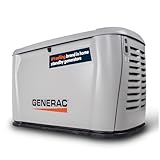
Best overall Generac 26kW Whole Home Generator |
26 kW standby | Natural gas / propane | Check Price |
Best upgrade DuroMax XP13000HXT Tri Fuel |
13,000 W peak | Gas, propane, natural gas | Check Price |
Best budget pick Westinghouse WGen9500DF |
12,500 W peak / 9,500 running | Gas or propane | Check Price |
Best minimal setup Honeywell 18kW Standby |
18 kW standby | Natural gas or propane | Check Price |
Best for pros Westinghouse WGen20000c |
28,000 W peak / 20,000 running | Gasoline | Check Price |
Runner-up DuroMax XP13000EH Dual Fuel |
13,000 W peak | Gas or propane | Check Price |


How I narrowed the field for a first-time buyer
I lined up the published specifications for every generator marketed as whole-home capable, then cut anything that would trip a beginner. Three cuts did most of the work.
First, I disqualified units with no transfer-switch-ready outlet or no standby wiring path. A beginner who cannot connect it to the panel is running extension cords through the door, which is not whole-house power in any real sense.
Second, I dropped units under about 12,000 peak watts. Below that, you are picking circuits, not running a home. Every survivor here clears that bar, from the 12,500 W Westinghouse WGen9500DF up to the 28,000 W Westinghouse WGen20000c.
Third, I favoured fuel flexibility. Four of the six picks run on at least two fuels, and the DuroMax XP13000HXT accepts three. That matters when a hurricane closes the gas stations and only propane trucks are moving.
What survived is a spread across two shapes: permanent standby generators sized in kilowatts, and heavy portables sized in watts. Both can back up a whole house. They ask very different things of the buyer.
1. Generac 26kW Whole Home Generator — Best overall
A permanent 26kW standby with cellular monitoring built in, and the longest warranty in this set.
Best for: a homeowner who wants a permanent, hands-off system Skip it if: you have no natural gas line and no room for a 524 lb pad
The Generac 7327 is the only pick here that solves the whole problem in one purchase. At 26 kW it covers a large home's full panel, including central AC and an electric range at the same time. The 30.7 x 46.4 x 26.3 in cabinet sits outside on a pad, wired through an automatic transfer switch, and runs on natural gas or propane so there is no fuel to store. When the power drops, it starts on its own within seconds.
Two things set it apart within this set. It is the only unit with built-in cellular connectivity, so Generac says the Mobile Link app monitors performance and lets you start a test remotely without a Wi-Fi bridge. It also carries a 5-year limited warranty, the longest here by two years.
The trade-off is real. It is the heaviest pick at 524 lb, the most expensive here, and installation demands a licensed electrician plus a gas plumber. This is not a weekend project.
Pros:
- 26 kW handles a full residential panel
- Built-in cellular monitoring, no bridge needed
- 5-year limited warranty, longest in this set
- Natural gas or propane, nothing to refill
- Automatic start during an outage
Cons:
- The most expensive pick in this set
- 524 lb, requires a prepared pad
- Professional install adds cost beyond the unit
- Needs an existing gas line to justify itself
2. DuroMax XP13000HXT Tri Fuel — Best upgrade
A 13,000 W portable that runs on gasoline, propane or natural gas, with push-button and remote start.

Best for: someone who wants three fuel choices without hiring an electrician for a standby Skip it if: you refuse to refill or swap fuel during a long outage
The XP13000HXT is the only tri-fuel unit in this set. DuroMax says a front-facing interface lets you change fuel type in seconds, which matters more than the marketing sound of it: during a long outage you may start on gasoline from the shed, switch to propane when the tank arrives, and settle on natural gas if your line stays live. That flexibility is a genuine beginner feature because it forgives whatever fuel supply survives.
At 240 lb with 26 x 30 x 29 in dimensions, it is manageable for a first-time buyer to position, park and roll into a covered outdoor spot. Push-button start and a remote key fob mean you never crank a pull cord in the rain. The 500cc engine and transfer-switch-ready outlet let you wire it into the panel through an interlock kit, so the whole house gets power through the same switches you use every day.
It sits second-cheapest here among the standby-capable options, and it sells faster than most of the set. The 3-year limited warranty is shorter than the Generac's five.
Pros:
- Three fuel types, front-panel selectable
- 13,000 W peak covers whole-home essentials
- Push-button plus remote start included
- 240 lb, movable by one adult with a hand truck
- Transfer-switch-ready outlet for panel wiring
Cons:
- Still requires refuelling or a live gas line
- 3-year warranty, two years shorter than the Generac
- No cellular monitoring
- Louder than a permanent standby by nature
3. Westinghouse WGen9500DF — Best budget pick
A 210 lb dual-fuel portable with 9,500 running watts, a remote key fob and everything you need in the box.

Best for: a first-time buyer covering essentials, not the whole panel Skip it if: you need to power central AC and an electric range together
The WGen9500DF is the cheapest of the six and the lightest at 210 lb. Westinghouse states 9,500 running watts on gasoline and 8,500 on propane, with peaks of 12,500 and 11,200 respectively, and up to 12 hours of run time. That is enough for a fridge, well pump, furnace blower, lighting circuits and a window AC, but it is not enough to keep a large central air handler running alongside an electric oven.
Two details make it the right entry point for a beginner. The box includes a remote start key fob, 12V battery charger, oil, funnel, tool kit and manual, so you are not chasing accessories on day one. The outlet panel carries a transfer-switch-ready L14-30R alongside two GFCI household receptacles and a 14-50R RV outlet, all under rubber covers.
It sells faster than any other pick in this set, and it is the second-lightest here. The trade-off against the Generac and Honeywell is capacity: you will choose which circuits matter, rather than running everything.
Pros:
- Cheapest of the six picks
- Lightest at 210 lb, easiest to position
- Remote start key fob included
- Transfer-switch-ready and RV-ready outlets
- Plug-and-play accessories in the box
Cons:
- 9,500 running watts limits simultaneous loads
- Gasoline or propane only, no natural gas
- 3-year warranty, not five
- The one buyers choose most often here, so stock moves
4. Honeywell 18kW Whole Home Standby Generator — Best minimal setup
An 18 kW dual-fuel standby that Honeywell says installs on a composite pad directly on soil, with no concrete base.

Best for: a buyer who wants a standby without pouring a concrete pad Skip it if: you want cellular monitoring built into the unit
The Honeywell G00723610 is the only pick here that ships with a composite mounting pad Honeywell says installs directly on soil. That single detail turns a two-visit installation, one for the pad pour and one for the wiring, into a shorter project. For a beginner budgeting the total cost of getting to first-start, this is where hidden money disappears.
The 18 kW output is smaller than the Generac's 26 kW, and it will not run every heavy appliance at once in a large home. In a medium home with a gas furnace, a heat pump on smart load management, and normal kitchen loads, it is sized right. Honeywell describes an LCD control panel with multi-language real-time updates, a natural-gas-or-propane fuel path, and an all-weather aluminum enclosure with enhanced locks.
At 483 lb it is the second-heaviest here, and the 29 x 48 x 25 in cabinet still needs clear side-wall setback from windows and vents. The 3-year limited warranty is shorter than the Generac's, and this unit has no cellular monitoring listed.
Pros:
- Composite pad, no concrete required
- 18 kW handles a medium home's essentials
- Dual fuel: natural gas or propane
- LCD panel with real-time status
- Aluminum enclosure with reinforced locks
Cons:
- Slowest seller of the six
- No cellular monitoring listed
- 3-year warranty, two shorter than Generac
- Still requires professional electrical and gas work
5. Westinghouse WGen20000c — Best for pros
A 999cc V-twin portable with 20,000 running watts, four household outlets and CO shutdown, at 541 lb.

Best for: a large home with heavy loads and a helper to move 541 lb Skip it if: this is your first generator and you have never wired a transfer switch
The WGen20000c is the largest portable in this set by a wide margin. Westinghouse lists 28,000 peak watts and 20,000 running watts from a 999cc V-twin OHV engine, with automatic CO shutdown, low-oil protection and up to 15 hours of run time. The outlet block is unusual: four GFCI household outlets, two 14-50R 50A outlets, two L14-30R 30A outlets and an L5-30R, plus an ST switch outlet.
For a large home with a real load list, this is the closest a portable comes to standby capacity, and it is transfer-switch-ready in the same way a smaller portable is. Westinghouse describes low THD, which the listing says is safe for phones, computers and TVs.
The reason it lands here rather than higher is honest weight. At 541.1 lb and 40.4 x 38 x 35 in, it is heavier than the Generac standby and only movable on its wheels across a flat, hard surface. It is gasoline only. It rewards a buyer who already knows their way around a transfer switch, and punishes one who does not.
Pros:
- 20,000 running watts, largest portable here
- 999cc V-twin with CO shutdown
- Low THD safe for sensitive electronics
- Ten outlets across four voltages
- Up to 15 hours of run time
Cons:
- Gasoline only, no dual-fuel option
- 541.1 lb, heaviest pick in the set
- Steepest learning curve for a beginner
- Requires a large fuel supply for a long outage
6. DuroMax XP13000EH Dual Fuel — Runner-up
A 234 lb dual-fuel portable with the same 13,000 W output as the tri-fuel HXT, at a lower price position.

Best for: a beginner who wants dual fuel at the lowest weight in the standby-adjacent tier Skip it if: you also want natural gas as a third option
The XP13000EH is what you buy when the tri-fuel XP13000HXT is more capability than you need. Same 13,000 W ceiling, same 26 x 30 x 29 in footprint, same all-metal frame, same push-button start and front-panel fuel selector. What you lose is the natural gas fitting: this unit runs on gasoline or propane only.
For most beginners without a gas line to the yard, that is not a real loss. Propane in a 20 lb or 100 lb tank sits ready between outages and does not stale the way gasoline can. DuroMax states the transfer-switch-ready outlet, so wiring to the panel through an interlock is the same job as with the HXT.
It is the second-cheapest pick here and 234 lb, six pounds lighter than the tri-fuel version. The 3-year warranty matches the DuroMax and Westinghouse portables. The reason to reach for the HXT instead is a live natural gas line at the house. Without one, this is the smarter buy.
Pros:
- 13,000 W peak with dual-fuel flexibility
- 234 lb, second-lightest here
- Push-button electric start
- Transfer-switch-ready outlet
- All-metal frame and power panel
Cons:
- No natural gas option
- 3-year warranty, not five
- No remote start listed
- Loud outdoor operation like any portable
Standby or portable: which suits a beginner?
The single biggest decision is not the brand or the wattage. It is the shape.
A standby generator is a permanent fixture wired to your panel through an automatic transfer switch. The Generac 26kW and Honeywell 18kW are both standbys. When utility power drops, they start on their own within seconds, and they run until utility power returns. You do not touch them during an outage. You do pay a licensed electrician and a gas plumber to install them, and you need a permanent fuel path.
A portable is a wheeled unit you park outside, connect through a transfer switch or interlock kit, and start yourself. The four DuroMax and Westinghouse picks are portables. They cost less at purchase, they need less permanent infrastructure, and they demand your attention: you refuel them, you start them, and you decide what circuits matter.
For a true beginner, a standby is easier to live with once installed and harder to install. A portable is harder to live with during an outage and easier to buy your way into. The best whole house generator for beginners depends on which of those trades you would rather make. If you plan to be away during outages, standby wins on its own.
How much wattage does a whole house really need?
Most beginners compare peak watts. Peak is the momentary surge a generator can supply for a few seconds when a motor starts. Running watts is the number that matters, and it is always lower.
Here is a rough sizing map from this set:
- Essentials only (fridge, freezer, well pump, furnace blower, lighting, phones): 5,000 to 8,000 running watts. Every pick here clears this.
- Essentials plus one large load (window AC or a 240V well, not both): 8,000 to 12,000 running watts. The Westinghouse WGen9500DF at 9,500 W fits here.
- Medium home, most circuits, careful use (central AC on a load manager, no electric range at the same time): 13,000 to 18,000 running watts. Both DuroMax 13,000 W units and the Honeywell 18kW cover this.
- Large home, everything at once (central AC, electric range, dryer, well): 20,000 running watts and up. Only the Westinghouse WGen20000c and Generac 26kW meet this.
The trick beginners miss is load staging. A 13,000 W portable can run a large home if you never run the dryer and the oven together. A 26 kW standby lets you stop thinking about it. That is what the extra money buys.
What the listings do not tell a first-time buyer
Four costs sit outside the box.
- Transfer switch or interlock kit. Every portable here is transfer-switch-ready, but the switch is a separate purchase and a separate install.
- Fuel storage. Gasoline stales in months without stabiliser. Propane keeps for years but the tank is not included.
- Pad and clearance. Standbys need setback from windows and vents. The Honeywell composite pad avoids the concrete pour but not the clearance rules.
- Break-in oil change. All these engines call for an early oil change. The Westinghouse WGen9500DF box includes oil and a funnel, which helps, but the second oil is on you.
None of this is in the product page bullets in useful detail, and none of it should be a surprise on install day.
If/then: when a different pick wins
- If you have no natural gas line and no room for a permanent pad, skip the Generac 26kW and start with the DuroMax XP13000HXT.
- If your loads are mostly essentials and budget is tight, the Westinghouse WGen9500DF is enough. Do not oversize on principle.
- If you want a standby without pouring concrete, the Honeywell 18kW is the only pick here that supports it.
- If you already own a smaller portable and want to jump to whole-house capacity in one purchase, the Westinghouse WGen20000c is the honest ceiling.
- If you want dual fuel at the lowest weight in the standby-adjacent tier and no natural gas, the DuroMax XP13000EH wins on value.
- If you travel often and cannot rely on being home to start a portable, the Generac 26kW is the only answer.
The verdict
The best whole house generator for beginners is the Generac 26kW Whole Home Generator. It starts on its own, runs on the fuel that most likely still flows during an outage, monitors itself over cellular, and carries the longest warranty in this set at 5 years. For a first-time buyer, "hands-off" is worth more than any single feature, and this is the only pick that delivers it in a large home.
The DuroMax XP13000HXT tri-fuel is the runner-up, and its advantage is specific. It is the only unit in this guide that accepts gasoline, propane and natural gas from the same front panel. If a long outage forces you through more than one fuel supply, that flexibility keeps you running when a single-fuel neighbour is dark. At 240 lb and roughly mid-range in this set, it is also the cheapest path to whole-house-capable power that a beginner can actually own, install through an interlock, and live with. Choose the Generac when the house is your permanent base. Choose the DuroMax when it is not, or when the gas line and the pad are dealbreakers.
FAQ
Is a whole house generator worth it for a beginner?
A whole house generator is worth it for a beginner when outages in your area last more than a few hours and happen more than once or twice a year. The Generac 26kW pays back in convenience, not just cost, because it starts automatically and runs on natural gas. If outages are rare and brief, a portable like the Westinghouse WGen9500DF covers essentials for less commitment.
How does the Generac 26kW compare with the Honeywell 18kW?
The Generac 26kW compares with the Honeywell 18kW on capacity and setup. The Generac delivers 26 kW, carries a 5-year limited warranty, and includes cellular monitoring. The Honeywell delivers 18 kW, carries a 3-year warranty, and Honeywell says it installs on a composite pad without a concrete base. Pick the Generac for a large home, the Honeywell to shorten the install.
What size generator do I need for a whole house?
What size generator you need depends on which loads run at once. Essentials only need around 8,000 running watts. Medium homes running central AC on a load manager need 13,000 to 18,000 running watts, which the DuroMax XP13000HXT and Honeywell 18kW cover. Large homes running everything simultaneously need 20,000 W or more, which only the Westinghouse WGen20000c and Generac 26kW meet.
Can I install a whole house generator myself?
Installing a whole house generator yourself is not a beginner project. A permanent standby like the Generac 26kW or Honeywell 18kW needs a licensed electrician for the transfer switch and a plumber for the gas line. A portable with an interlock kit is more approachable, but the panel work still calls for a permit and a professional in most jurisdictions. Buy the unit, hire the install.
What is the cheapest whole house generator for beginners?
The cheapest whole house generator for beginners in this guide is the Westinghouse WGen9500DF. It is the entry-tier pick, weighs 210 lb, and ships with a remote start key fob, oil, funnel and manual. It runs on gasoline or propane and carries a 3-year limited warranty. It will not power every circuit at once in a large home, but for essentials plus one heavy load it is enough.
Whole-house backup is the rare purchase where the right choice depends more on your fuel supply and your patience than on the spec sheet. Walk the outside of the house before you order anything. Find the gas meter, measure the clearance from windows and vents, and decide whether a permanent cabinet fits or a wheeled portable is the only realistic answer. Then match that answer to this guide. The Generac 26kW is the default because it removes the most decisions from the worst night of the year, and for a first-time buyer that is exactly what a whole house generator is supposed to do.